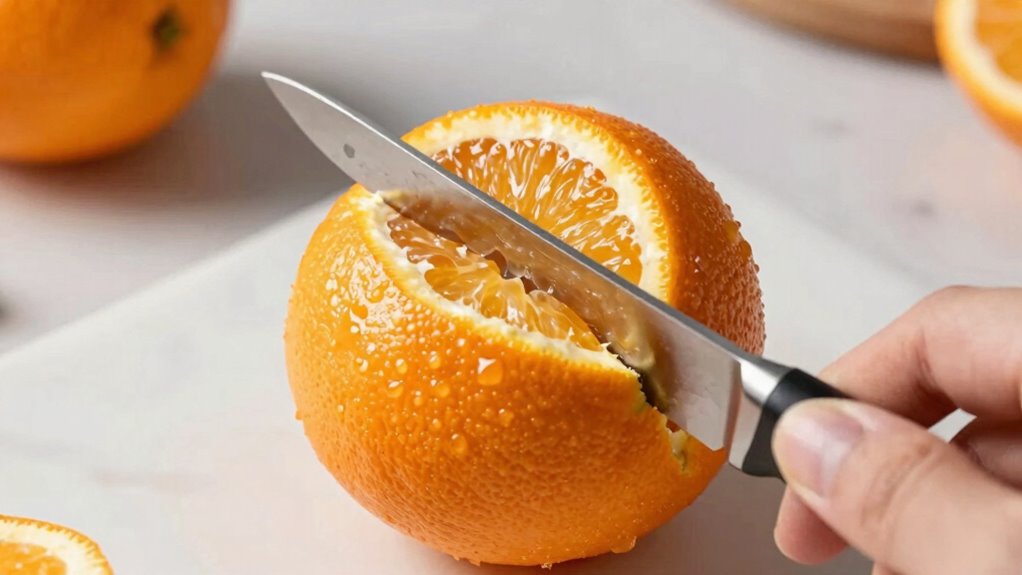

To prep citrus segments at home, start by choosing the right fruit—like navel oranges for easy peeling or blood oranges for richer flavor. Wash the fruit thoroughly, then cut off the ends and peel away the skin, following the fruit’s natural curve. Use a sharp knife to carefully cut along the membranes, releasing clean, pith-free segments. Store them in an airtight container in the fridge to keep them fresh. Keep going to learn more tips for perfect citrus prep.

Get kitchen gear delivered free — and shop member deals
- Fast, free delivery on millions of items
- Access to Prime Big Deal Days deals on October 6–7
- Prime Video, Amazon Music and more included
Key Takeaways
- Choose the appropriate citrus variety based on flavor and texture preferences.
- Wash the fruit thoroughly and cut off the top and bottom before peeling.
- Use a sharp knife to remove peel and pith, following the fruit’s natural curve.
- Cut along the membranes to release clean, pith-free segments using the Supreme method.
- Store segments in an airtight container in the fridge and consume within a few days for freshness.
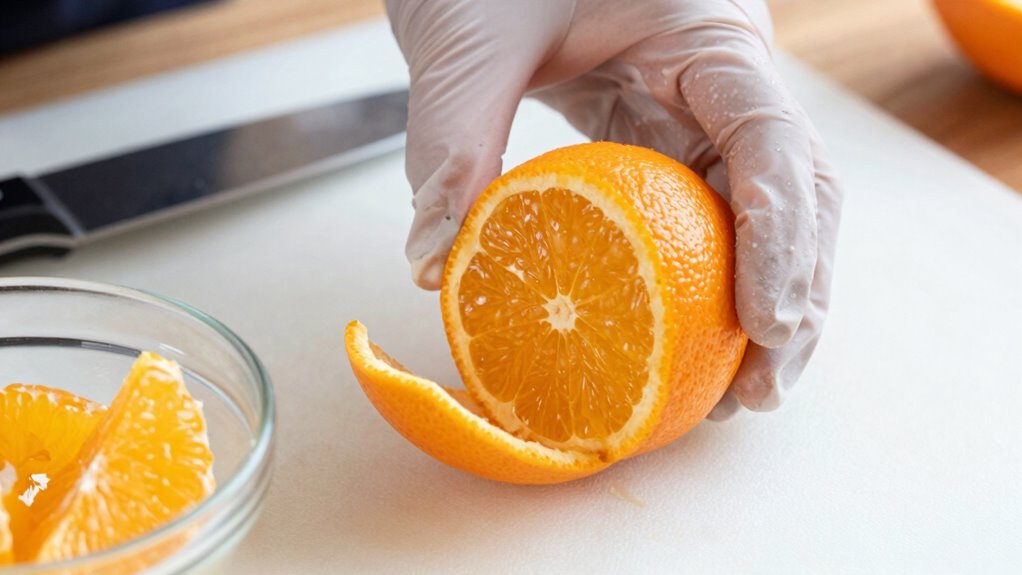
Preparing citrus segments at home might seem simple, but doing it the right way guarantees they’re tender, clean, and free of bitter pith. The first step is choosing the right citrus variety. Different citrus fruits, like navel oranges, blood oranges, or grapefruits, have unique textures and flavors, so select the one that best fits your taste and intended use. For example, navel oranges are sweet and easy to peel, making them perfect for snacking, while blood oranges offer a richer flavor suited for salads or desserts. Knowing your citrus variety helps you anticipate how to handle the fruit and guarantees your segments come out ideal.
Once you’ve picked your citrus, start by washing the fruit thoroughly under cold water to remove any wax or residues. To get clean, neat segments, use a sharp paring knife to cut off the top and bottom of the fruit, creating a flat surface. Place the fruit upright on your cutting board, and carefully slice away the peel and the white pith, following the curve of the fruit. Removing the pith is vital because it’s bitter and can affect the flavor of your segments. After peeling, hold the fruit over a bowl to catch any juice and cut along the membrane, gently slicing between the segments to release them cleanly. This method, called “supreme,” guarantees you get tender, pith-free segments that look appealing and taste delightful. Proper technique ensures your segments retain their natural flavor and texture. Using the right technique is crucial for achieving perfect citrus segments.
Proper segment storage is essential if you’re not using the citrus immediately. Once you’ve prepared the segments, store them in an airtight container in the refrigerator. This keeps them fresh and prevents them from drying out or absorbing other odors. If you’ve used a small amount of juice or syrup, add it to the container to help maintain moisture. Additionally, keeping the segments in a sealed container minimizes exposure to air, which can hasten deterioration. Citrus segments stored properly can last up to three days, but it’s best to consume them sooner for maximum freshness and flavor. To avoid spoilage, always check for signs of deterioration before serving. Using proper storage techniques helps preserve their freshness and quality, ensuring they taste their best when served.
As an affiliate, we earn on qualifying purchases.
Frequently Asked Questions
Can I Use a Regular Knife Instead of a Citrus Segmenter?
Yes, you can use a regular knife instead of a citrus segmenter. Just sharpen your knife and practice good knife skills to carefully cut away the peel and pith from various citrus varieties. Aim to slice close to the fruit, then gently separate the segments. With patience, you’ll master the technique, making clean, precise segments that look professional even without a specialized citrus tool.
How Do I Prevent Seeds From Falling Into the Segments?
To prevent seeds from falling into your citrus segments, use seed removal techniques like gently pinching or scooping them out with your fingers or a small spoon. When using citrus segment tools or a knife, hold the fruit steady and carefully cut around the seeds, removing them before segmenting. This guarantees clean, seed-free segments and makes your citrus prep neater and more enjoyable.
What’s the Best Way to Store Citrus Segments?
To safeguard your citrus segments’ flavor enhancement and nutritional benefits, store them in an airtight container in the fridge. This keeps their freshness intact and prevents them from absorbing other odors. For ideal results, consume within a few days, as freshness diminishes over time. Proper storage guarantees your segments stay juicy and flavorful, making every bite as delightful as the day you first prepared them.
Can I Prep Citrus Segments Ahead of Time?
Yes, you can prep citrus segments ahead of time. Doing so enhances flavor and preserves their nutritional benefits, making your dishes more convenient. Store the segments in an airtight container in the fridge for up to 24 hours, ensuring they stay fresh. This prep method not only boosts flavor but also helps retain the nutrients, so you get the most out of every juicy, flavorful bite whenever you’re ready to use them.
Are There Any Safety Tips for Handling Sharp Knives?
Yes, there are safety tips you should follow when handling sharp knives. Always practice proper knife safety by keeping your fingers tucked in using the claw grip, ensuring your cutting techniques are controlled and deliberate. Use a stable cutting board, and never rush through your prep. Keep knives sharp—dull blades are more dangerous because they require more force. By following these safety tips, you reduce the risk of accidents and make your prep smoother.
citrus segment storage container
As an affiliate, we earn on qualifying purchases.
As an affiliate, we earn on qualifying purchases.
Conclusion
Now that you know how to prep citrus segments properly, you can enjoy their vibrant color, juicy texture, and invigorating flavor anytime. With a sharp knife in hand, a gentle touch, and a steady eye, you turn simple fruit into perfect, bite-sized treasures. Each peel removed, each segment separated, brings you closer to a bowl of citrus brilliance. Embrace the process, savor the crispness, and let your prep transform everyday fruit into a burst of sunshine.
As an affiliate, we earn on qualifying purchases.
As an affiliate, we earn on qualifying purchases.
Fall Picks
fall essentials
As an affiliate, we earn on qualifying purchases.