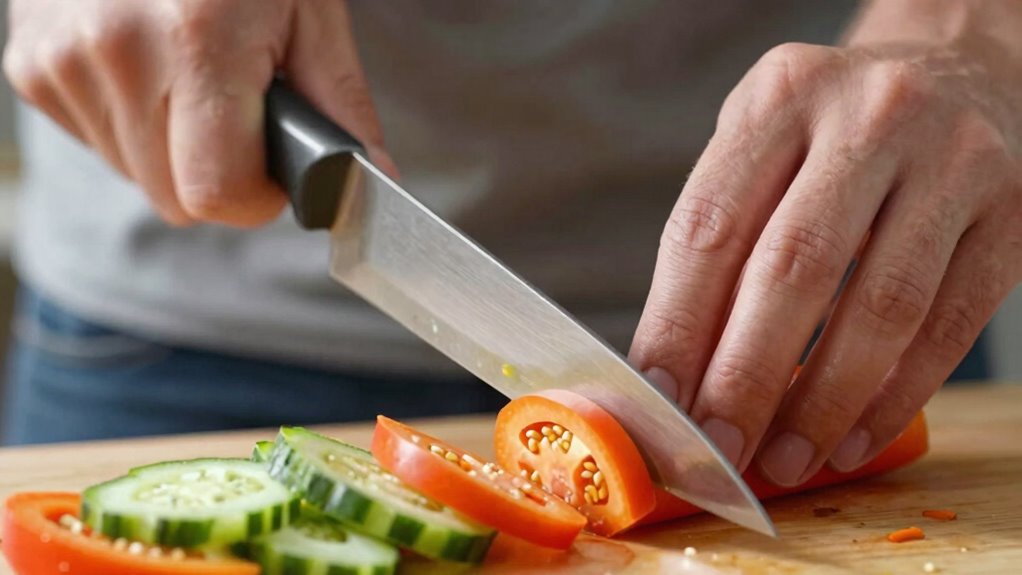
To use the knife tip without feeling unsteady, guarantee you grip the handle firmly yet relaxed, mimicking a handshake for control. Curl your guiding fingers inward into a claw to protect them and maintain stability. Practice maintaining consistent hand positioning and muscle memory to build confidence. Focus on controlling the knife’s tip with light, precise movements. Mastery comes with regular practice, and the more you refine your technique, the steadier your knife tip will become—continue to explore for more tips.

Get kitchen gear delivered free with Prime
- Fast, free delivery on millions of items
- Prime Video, Amazon Music and more included
- Member-only deals all year
Key Takeaways
- Keep your guiding hand’s fingertips curled inward in a claw shape to protect fingers and maintain control.
- Practice gentle, controlled movements with the tip to build confidence and reduce wobbling.
- Use a relaxed grip on the handle, avoiding excessive pressure that can cause instability.
- Focus on small, precise motions, especially when guiding the knife tip for delicate cuts.
- Regularly practice cutting techniques to develop muscle memory and stabilize your knife tip control.

Using the tip of your knife confidently is vital for precise cuts and safe handling, but many people feel unsteady when trying to do so. The key to overcoming this is mastering your knife grip and hand positioning. How you hold your knife directly influences your control, balance, and ability to make delicate cuts with the tip. A proper grip isn’t just about comfort; it’s about creating a stable foundation that allows you to maneuver the knife with finesse.
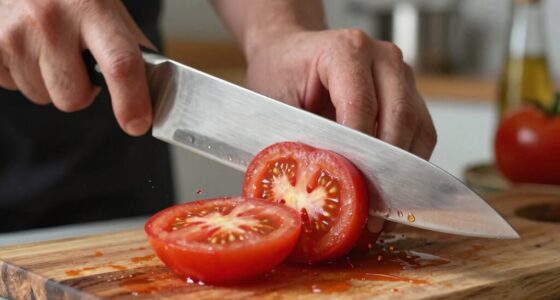
Start by gripping the handle firmly but not tightly, ensuring your hand is relaxed enough to maintain control without fatigue. Your dominant hand should hold the knife with a grip similar to a handshake, with your fingers wrapped around the handle and your thumb resting comfortably on the side. This grip provides stability, especially when you’re working with the tip of the knife. Your other hand, the guiding hand, should be positioned with your fingertips curled inward, creating a claw-like shape that protects your fingers from the blade. This hand positioning helps you control the movement and pressure, giving you precision when directing the tip. Developing proper hand positioning is essential for building your confidence and precision over time, as it helps you develop muscle memory and consistency in your technique. Additionally, focusing on technique reinforcement through consistent practice can further enhance your skills. Improving your knife skills can also reduce fatigue and prevent accidents, making your overall cooking experience safer and more enjoyable. Regular practice also helps to develop technique consistency, which is crucial for executing intricate cuts smoothly.
Hold the knife with a relaxed, handshake grip for stability and precision while protecting your fingers with a claw-like guiding hand.
Practice is essential. As you become more comfortable holding the knife correctly and positioning your hand properly, your confidence will grow. Over time, you’ll notice that using the tip of your knife feels natural and steady, allowing you to execute intricate cuts with precision and safety. With the right knife grip and mindful hand positioning, you’ll master the art of delicate cutting and gain greater control over every slice.
As an affiliate, we earn on qualifying purchases.
Frequently Asked Questions
What Types of Knives Are Best for Tip Control?
For tip control, choose smaller, precise knives like paring or utility knives. These knives give you better maneuverability, helping you stay safe by maintaining control and reducing accidental slips. Using the right knife for your cutting techniques enhances safety and accuracy, so focus on proper grip and knife safety. Practice with these smaller knives to develop steady, confident movements, making tip work safer and more precise in your kitchen.
How Can I Improve My Overall Knife Skills?
Imagine your knife gliding like a whisper through ingredients—improving your skills starts with practicing knife safety and mastering sharpening techniques. Focus on proper grip, controlled motions, and maintaining a sharp edge; a dull knife forces you to struggle. Regularly honing your blade boosts confidence and precision. By honing these habits, your overall knife skills will sharpen, making you a more confident, efficient, and safe cook at every cut.
Are There Specific Exercises to Steady Hand Movements?
To steady your hand movements, focus on hand stabilization through finger exercises. Practice gripping the knife lightly and maintaining a relaxed grip to reduce tremors. Do finger exercises like squeezing a stress ball or finger stretches to improve control and strength. Regularly practicing these movements helps develop muscle memory, making your knife tip steadier. Over time, you’ll notice better precision and less unsteadiness when using the knife.
How Do I Clean and Maintain My Knife Tips?
To clean and maintain your knife tips, start by washing them with warm, soapy water after each use. Dry thoroughly to prevent rust. Regular knife sharpening keeps blades sharp, making precise cutting easier and safer. Practice proper cutting techniques to reduce unnecessary wear. For extra care, occasionally use a honing rod to realign the edge. Proper maintenance guarantees your knife tips stay sharp, clean, and effective for all your cutting tasks.
Can Using a Different Grip Help With Stability?
Yes, a grip modification can considerably improve stability when using the knife tip. By adjusting your hand position and applying proper hand stabilization, you create better control. Hold the handle firmly but relaxed, and position your fingers to support the knife’s movement. This technique reduces wobbling, enhances precision, and makes using the knife tip safer and more comfortable. Practice different grips until you find one that offers maximum stability and confidence.
As an affiliate, we earn on qualifying purchases.
Conclusion
Mastering the knife tip is like learning to dance softly on a tightrope—you’ll find your balance with patience and practice. Trust your hand and embrace the gentle rhythm of each cut, allowing your confidence to quietly grow. When you treat your approach with care, even the slightest touch becomes a powerful tool. Remember, a steady hand isn’t born overnight, but with gentle persistence, you’ll glide through your tasks with grace and ease, transforming uncertainty into quiet assurance.
As an affiliate, we earn on qualifying purchases.
cutting technique training knife
As an affiliate, we earn on qualifying purchases.
As an affiliate, we earn on qualifying purchases.
Halloween Picks
halloween
As an affiliate, we earn on qualifying purchases.