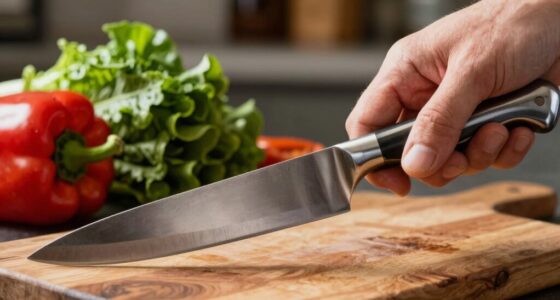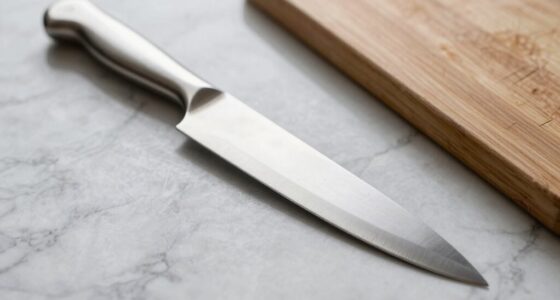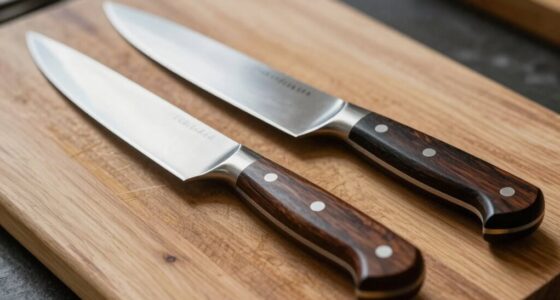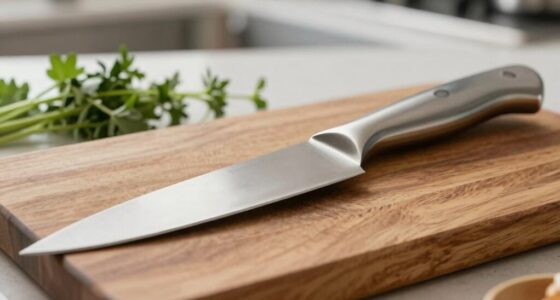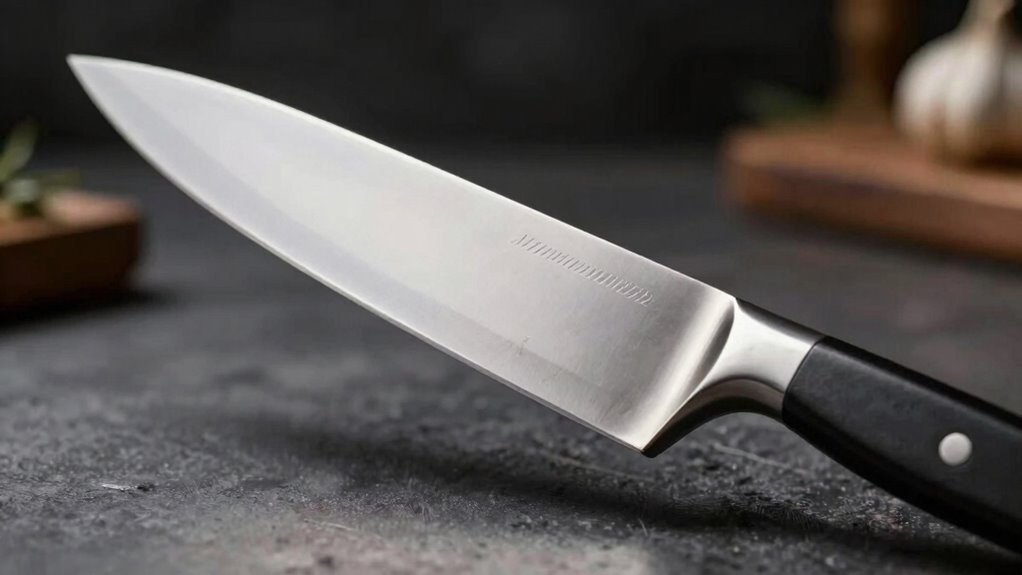

If a knife feels fast, it likely has a lightweight, well-balanced design that makes it swift and precise, but this responsiveness also means it’s less forgiving of mistakes. You need steady hands and proper technique because even small miscalculations can lead to messy cuts or accidents. Its sharp, sensitive edge reacts quickly, rewarding skill but punishing haste. To master such a knife, understanding its design is key—keep exploring to learn more about making the most of its capabilities.

Get kitchen gear delivered free — and shop member deals
- Fast, free delivery on millions of items
- Access to Prime Big Deal Days deals on October 6–7
- Prime Video, Amazon Music and more included
Key Takeaways
- Highly balanced knives enable quick handling but can be less forgiving if technique falters.
- Thin, sharp blades provide speed but are more prone to chipping or dulling with improper use.
- Increased responsiveness enhances control but demands precise handling, punishing mistakes.
- Fine blade geometry improves cutting efficiency but reduces tolerance for sloppy technique.
- High-performance knives require skillful use; haste or errors can lead to damage or poor cuts.
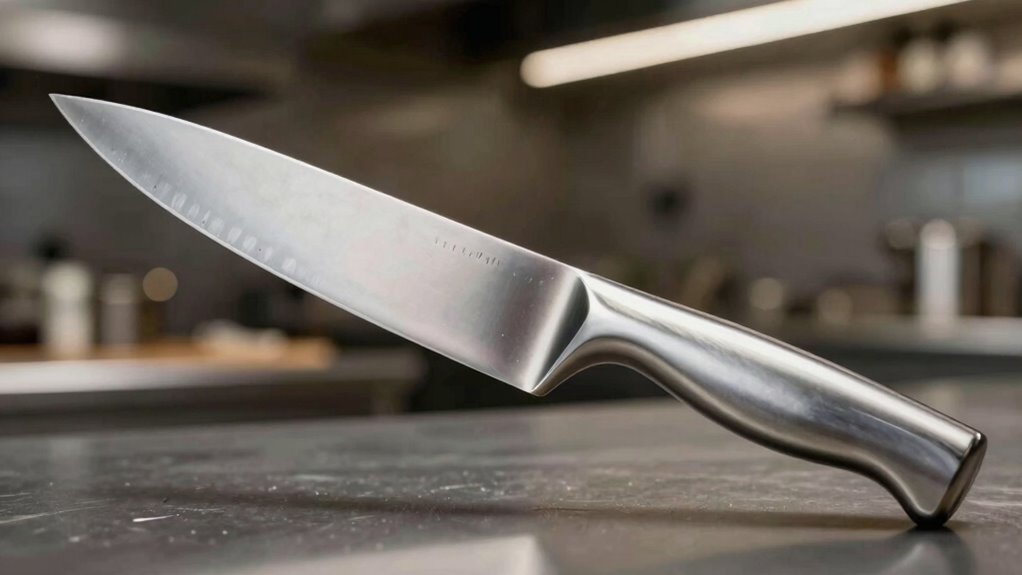
Have you ever wondered why knives feel so quick and responsive in your hand, yet they can be unforgiving when it counts? The answer lies in how their design influences performance—especially their blade balance and cutting precision. When a knife is well-balanced, it feels almost instinctive to maneuver, giving you that sense of speed and agility. This balance ensures that the weight distribution allows for precise control, making quick cuts effortless. You might notice that a well-balanced knife lets you slice through ingredients smoothly, almost as if the knife is an extension of your hand. But this same responsiveness can be misleading if you’re not careful, because it often masks the knife’s sensitivity to missteps.
Blade balance directly impacts how a knife feels during use. If the weight is concentrated toward the handle, the blade may feel sluggish or awkward, reducing your control. Conversely, a blade weighted toward the tip can feel overly sensitive, demanding more precise handling. When the balance is just right, you gain an intuitive sense of where the edge is, which enhances your cutting precision. That sharp, direct feeling lets you execute quick, accurate cuts without much effort. However, this heightened responsiveness means that any slight miscalculation—like applying uneven pressure or slipping—can result in a messy cut or even injury. The knife’s responsiveness demands that you stay focused, because it’s less forgiving of mistakes. Additionally, blade geometry plays a crucial role in how the knife performs and how unforgiving it is during use, influencing both cutting speed and safety. Proper blade geometry can also help distribute stresses more evenly across the edge, making it more resilient under demanding conditions.
Balanced knives enhance control and precision but require careful handling to avoid mistakes and injuries.
Cutting precision is also affected by the blade’s design and how it interacts with your technique. A fast-feeling knife often has a thin, sharp edge that slices with minimal resistance. While this makes for swift cuts, it also makes the blade more vulnerable to chipping or dulling if you’re not careful. The same high-performance edge that offers quick, clean cuts can be delicate, so a slight misjudgment might cause damage or result in a less effective cut. This is why these knives are unforgiving; their responsiveness is a double-edged sword. They reward skill and finesse but punish haste or sloppy technique. Additionally, blade geometry influences how the knife interacts with different foods, further affecting how forgiving or unforgiving the knife feels. Maintaining a proper sharpening and honing routine is essential to preserving both performance and forgiveness over time.
In the end, feeling fast but not forgiving comes down to the interplay between blade balance and cutting precision. You get a knife that responds instantly to your commands, giving you speed and accuracy. But that same responsiveness demands respect and skill. You need to develop a steady hand and attentive technique, because these knives don’t hide their vulnerabilities. Their quickness is a reflection of their finely tuned design—powerful, precise, but unforgiving if you don’t handle them with care.
high-performance Japanese chef knife
As an affiliate, we earn on qualifying purchases.
As an affiliate, we earn on qualifying purchases.
Frequently Asked Questions
How Does Blade Geometry Affect Knife Responsiveness?
Blade geometry considerably impacts knife responsiveness, especially through blade curvature and handle ergonomics. A curved blade allows for smoother, more precise cuts, making the knife feel quicker in your hand. Meanwhile, ergonomic handles improve control and reduce fatigue, enhancing responsiveness. When these elements work together, your knife becomes more responsive, reacting swiftly to your movements, giving you better control and confidence during detailed or rapid tasks.
What Materials Contribute to a Knife’s Speed?
Sure, it’s all about magic, right? Actually, materials like high-carbon stainless steel boost a knife’s speed thanks to their light weight and sharp edge retention. Blade durability ensures it stays swift over time, while handle ergonomics lets you wield it effortlessly. Together, these elements make your knife feel lightning-fast without sacrificing control, guaranteeing you slice smoothly and confidently—no tricks needed.
Why Do Some Knives Lose Edge Quickly Despite Feeling Fast?
You might find some knives lose their edge quickly despite feeling fast because their handle material and ergonomic grip can influence how you apply pressure, causing uneven wear. Lightweight materials like softer plastics or composites can make a knife feel swift but lack durability, leading to quicker dulling. Poorly designed ergonomic grips also cause uneven force distribution, accelerating edge damage. Choose knives with sturdy handle materials and well-designed grips for better edge retention and consistent performance.
How Does Weight Distribution Impact Knife Forgiveness?
Weight distribution greatly impacts knife forgiveness by affecting your control and stability. When the handle balance is well-placed, especially with an ergonomic grip, you’ll find it easier to maintain precision during cuts, reducing mishaps. A balanced handle ensures the knife responds predictably, making it more forgiving if you make a mistake. Conversely, uneven weight distribution can lead to jerky movements, increasing the chance of slips and accidents.
Can Sharpening Techniques Improve Forgiveness in Fast Knives?
Yes, sharpening techniques can improve forgiveness in fast knives. You might think a sharper blade just cuts better, but a proper sharpening angle and blade polish reduce resistance and make the knife more forgiving, especially during tricky cuts. Maintaining a consistent sharpening angle prevents uneven edges, and a polished blade minimizes sticking. This combination helps your fast knife perform smoothly and reduces the risk of slips or mistakes.
As an affiliate, we earn on qualifying purchases.
Conclusion
So, don’t be fooled by a knife that feels fast—it might not forgive your mistakes. While a sharp, responsive blade can boost your confidence, it also demands precision. If you’re worried about slipping or mishaps, start with a more forgiving knife to build your skills. Once you’re comfortable, upgrading to a faster, less forgiving blade will sharpen your technique without risking your safety. Remember, the right knife matches your skill level and keeps cooking enjoyable.
As an affiliate, we earn on qualifying purchases.
lightweight professional kitchen knife
As an affiliate, we earn on qualifying purchases.
As an affiliate, we earn on qualifying purchases.
Fall Picks
fall essentials
As an affiliate, we earn on qualifying purchases.