For effective meat prep at home, use a chef knife for most cutting tasks like slicing and dicing larger cuts or poultry. A boning knife helps with precise work like removing bones and trimming fat, while a utility knife is great for detailed trimming. Finish with a paring knife for garnishes or small trims, and a bread knife for slicing bread or soft produce. mastering these roles guarantees smooth prep — continue exploring to sharpen your skills.
Key Takeaways
- Use a chef knife for breaking down large meat cuts, slicing poultry, and chopping vegetables efficiently.
- Employ a boning knife for precise removal of bones, trimming fat, and filleting fish or poultry.
- Rely on a utility knife for detailed trimming, peeling, and handling smaller or delicate tasks.
- Utilize a paring knife for trimming uneven edges, peeling, and garnishing to enhance presentation.
- Keep all knives sharp and well-maintained to ensure safety, precision, and ease during meat prep.

Mueller 7-Inch Meat Cleaver Butcher Knife – German High Carbon Steel, Laser-Tested Razor-Sharp Blade, Heavy Duty Bone Chopper for Meat & Vegetables, Home & Restaurant, Gift for Him
- Laser-Tested German Steel Edge: Precision-forged high-carbon stainless steel blade
- Razor-Sharp Double-Bevel Edge: 18° angle resists chips and stays sharp
- Rust and Corrosion Resistant: Maintains quality through heavy use
As an affiliate, we earn on qualifying purchases.
As an affiliate, we earn on qualifying purchases.
Understanding Your Essential Kitchen Knives
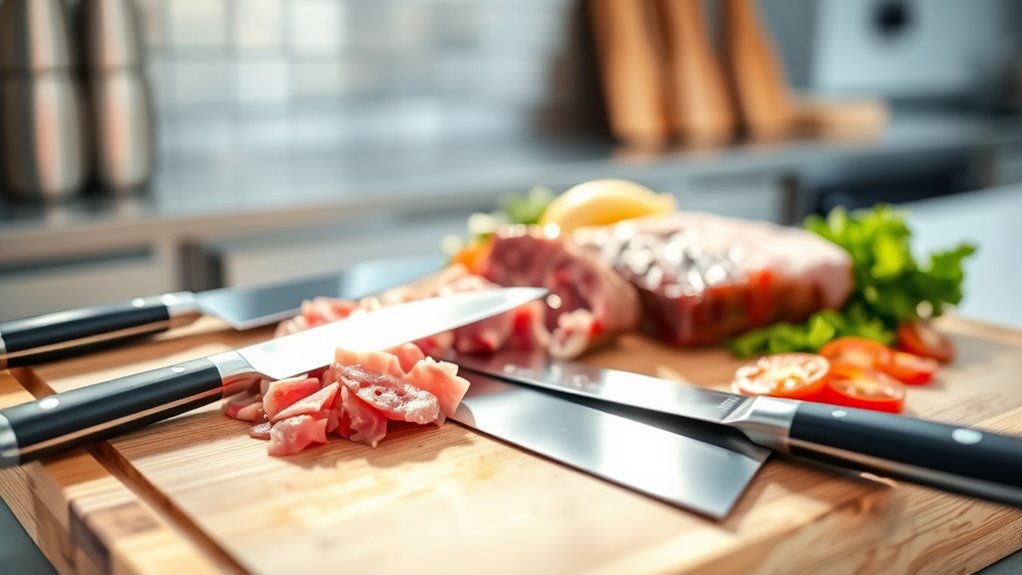
To master your kitchen, it is essential to understand the roles of your main knives. Your chef knife handles about 80% of cutting tasks, from breaking down chicken wings to dicing onions. Its long, curved blade allows for rocking cuts, making chopping efficient. A paring knife, with a 2- to 4-inch blade, is perfect for detailed work like peeling and trimming small produce. The boning knife is flexible, designed to remove bones and trim fat, especially with poultry and meat. The cleaver, with its wide, thick blade, handles tough cuts, bones, and chopping vegetables. Finally, the utility knife bridges gaps, supporting meat trimming and detailed tasks. Knowing when to use each knife ensures safer, faster, and more precise meat prep in your home kitchen. Additionally, understanding modern kitchen technology can enhance your prep process with smart tools that improve safety and precision. Incorporating innovative culinary tools can further elevate your cooking efficiency and safety standards.

Victorinox Fibrox 6-In Curved Boning & Fillet Knife, Flexible Steel Blade
- Purpose: Ideal for trimming meat and fish
- Blade Design: Curved, flexible stainless steel blade
- Handle: Textured, slip-resistant Fibrox handle
As an affiliate, we earn on qualifying purchases.
As an affiliate, we earn on qualifying purchases.
When to Choose a Chef Knife for Meat Preparation
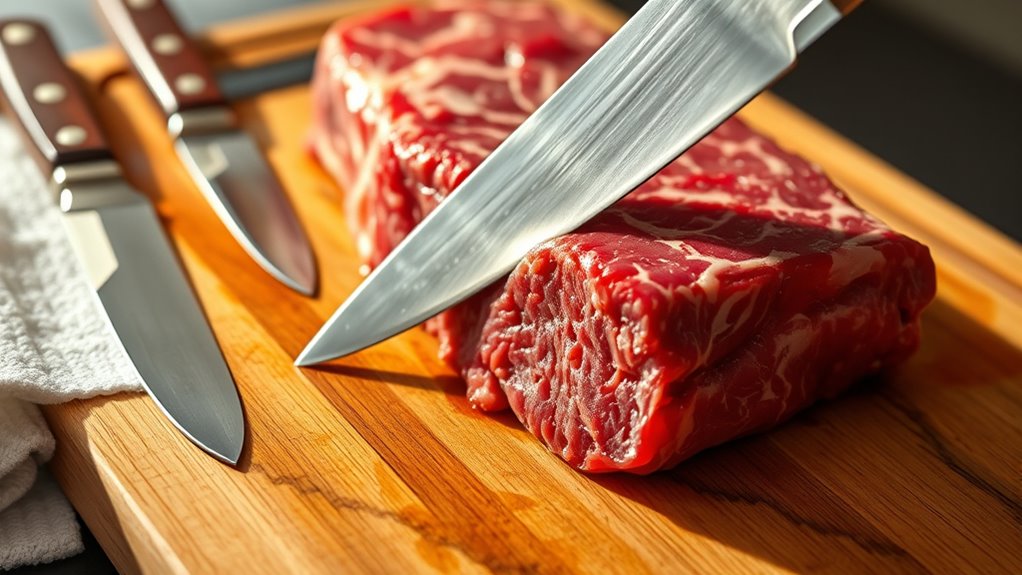
A chef knife is your go-to tool for most meat preparation tasks because of its versatility and efficiency. Use it when you need to break down larger cuts of meat, such as trimming briskets or slicing roasts, where control and a sharp edge are essential. It’s ideal for cutting through poultry, fish, and beef, thanks to its long, curved blade that enables rocking cuts. When dicing vegetables or herbs to accompany your meat, the chef knife simplifies the process with its broad surface. Its size—typically 8 inches—is perfect for home cooks, providing enough leverage without feeling unwieldy. Whenever your task involves slicing, chopping, or trimming multiple types of meat and produce, reach for your chef knife for quick, precise results. Additionally, understanding the thermal behavior of your knife can help maintain its sharpness and longevity through proper care, especially since the material composition influences how well a knife retains heat and resists corrosion.
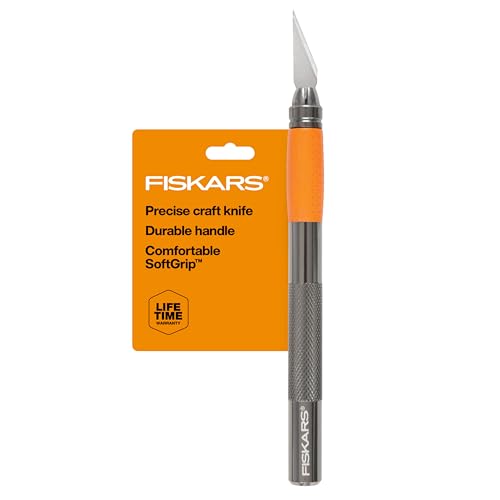
Fiskars 6" Detail Craft Knife, Exacto Hobby Utility Knife, Durable Aluminum
- Ideal for Arts & Crafts: Durable aluminum handle with SoftGrip
- Precise Cutting Performance: Cuts paper, plastic, photos, vinyl, canvas
- Versatile & Compatible: Works with standard hobby blades
As an affiliate, we earn on qualifying purchases.
As an affiliate, we earn on qualifying purchases.
The Role of a Boning and Utility Knife in Butchery Tasks
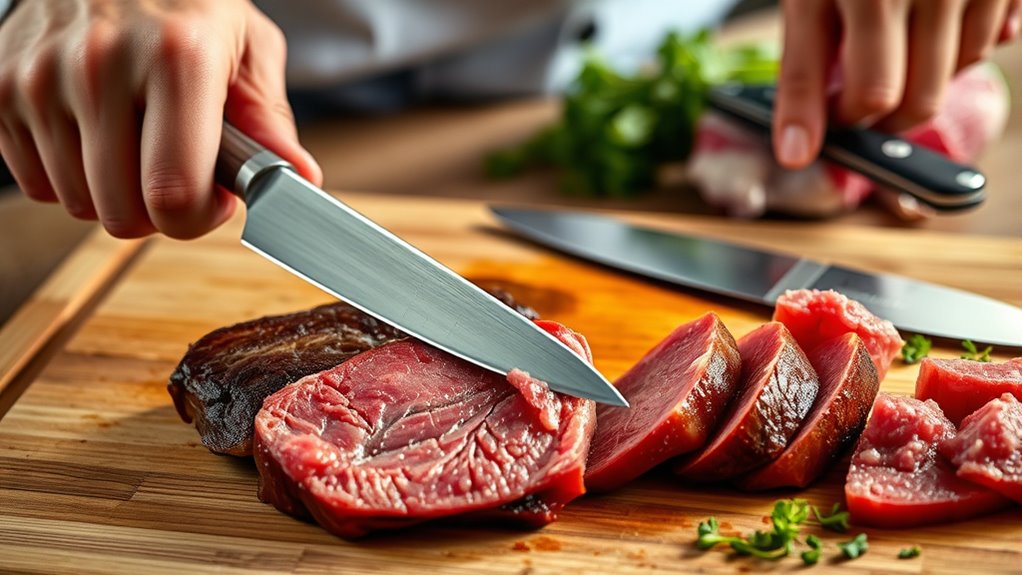
Boning and utility knives are essential tools that excel in detailed butchery tasks. The boning knife’s flexible, narrow blade helps you remove bones, trim fat, and separate cartilage from meat with precision. Use it for breaking down poultry or filleting fish, where flexibility matters most. The utility knife bridges the gap between larger knives and paring knives, making it perfect for trimming small cuts, peeling, and detailed meat work.
| Knife Type | Main Tasks | Best For |
|---|---|---|
| Boning Knife | Removing bones, trimming fat, filleting | Poultry, fish, delicate meat work |
| Utility Knife | Trimming, peeling, detailed cuts | Small meat, fruits, vegetables |
| Both | Precision tasks, detailed butchery work | Versatile, essential for home butchery |

VITUER Paring knife, 4PCS Paring knives (4 Knives and 4 Knife cover), 4 Inch Peeling Fruit and Vegetable Knife, Ultra Sharp Kitchen Knives, German Steel, PP Plastic Handle
- Set Includes: 8-piece paring knife set with sheaths
- Versatile Use: Suitable for chopping, slicing, mincing, dicing
- High-Quality Blade: German stainless steel with razor-sharp edge
As an affiliate, we earn on qualifying purchases.
As an affiliate, we earn on qualifying purchases.
Using a Paring and Bread Knife for Finishing Touches
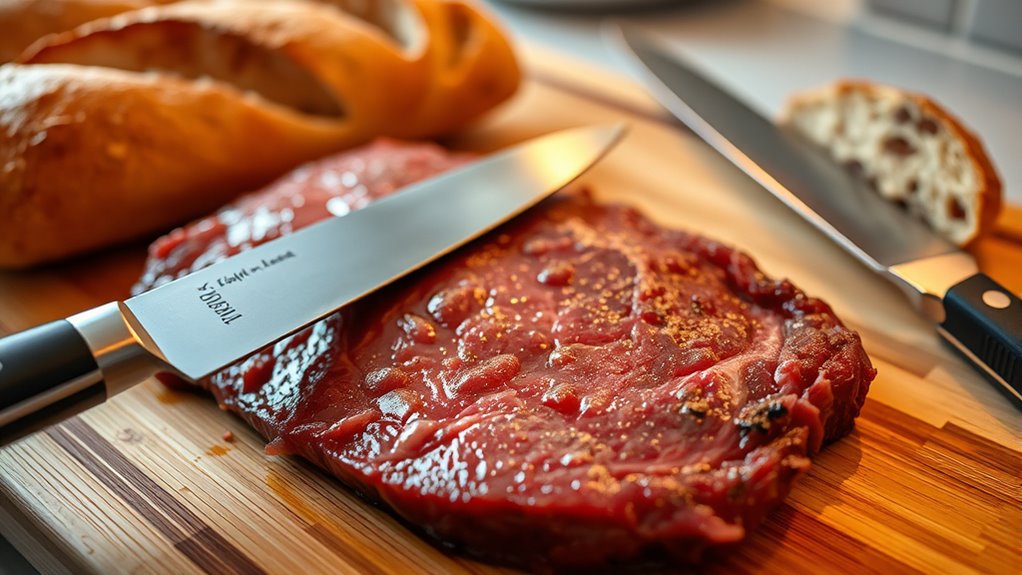
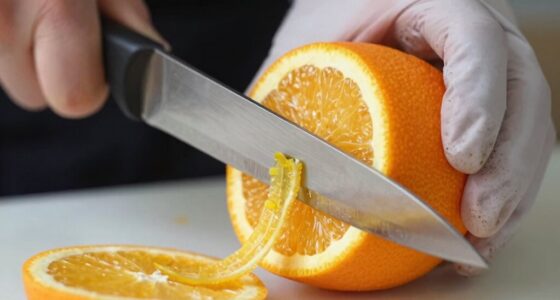
Using a paring knife and bread knife can elevate your finishing touches by adding precision and finesse to your prep work. A paring knife is perfect for detailed tasks like trimming uneven edges, removing peels, or creating decorative garnishes. Its small, sharp blade allows for controlled, delicate movements, making your presentation look polished. When finishing a plate, use the paring knife to add small, refined details and the bread knife to perfect the texture of bread or fruit. The blade design of each knife plays a crucial role in their effectiveness, ensuring you can execute your finishing touches with confidence. The bread knife, with its serrated edge, excels at slicing through crusty bread and soft produce without crushing them. It ensures clean, even slices, enhancing the visual appeal of your dish. Proper technique and handling skills are essential for maximizing the effectiveness of each knife type and achieving the desired results. Additionally, understanding the knife roles can help you select the appropriate tool for each task, leading to more precise and efficient prep work. Developing knife skills through practice will also increase your confidence and precision in the kitchen.
Tips for Maintaining and Selecting the Right Knife for Every Job
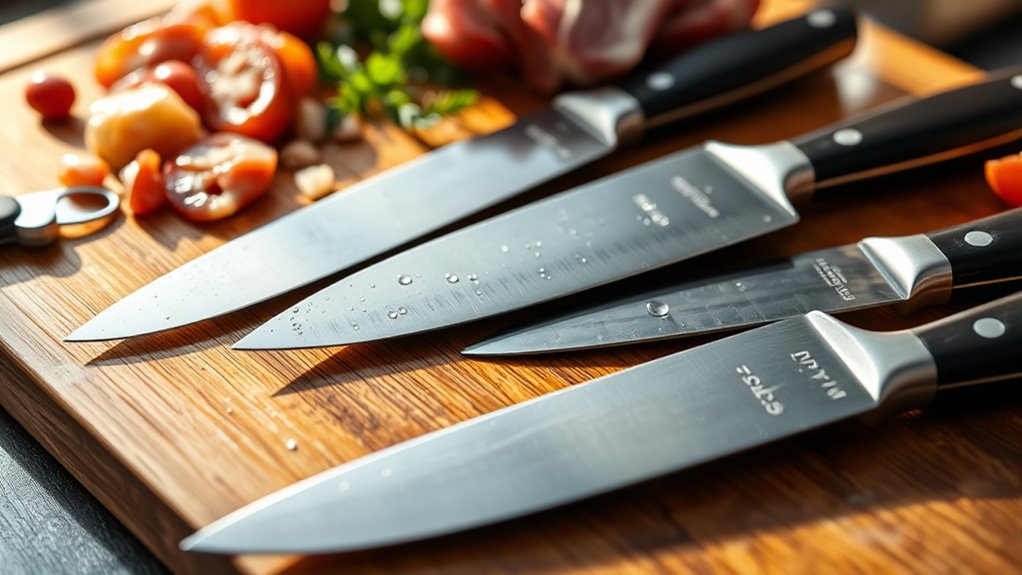
Choosing the right knife for each task is essential to guarantee efficiency and safety in your kitchen. To select the best tool, consider the size, shape, and flexibility needed for the job. Keep your knives sharp—dull blades require more force and can cause accidents. Regularly hone your knives with a honing steel to maintain their edge, and periodically sharpen them with a whetstone or professional service. Store knives properly in a knife block or on a magnetic strip to prevent damage and ensure quick access. When maintaining your knives, wash them by hand with mild soap and dry immediately to prevent rust. Invest in quality knives suited to your cooking style, and you’ll cut more precisely while reducing fatigue and risk. Proper knife handling techniques also contribute significantly to safety and efficiency in the kitchen. Additionally, understanding the different knife roles and when to use each can improve your culinary results and prolong your knives’ lifespan. Being familiar with the essential knives and their specific functions helps you choose the right tool for every preparation step. Incorporating ergonomic design features in your knife selection can further reduce hand fatigue during extended use. Using sound science principles, such as proper cutting techniques, can also minimize damage to your knives and improve overall performance.
Frequently Asked Questions
How Do I Properly Store Different Kitchen Knives to Prolong Their Lifespan?
You should store your knives properly to keep them sharp and safe. Use a knife block, magnetic strip, or individual sheath to prevent blades from dulling or getting damaged. Avoid tossing them loose in drawers, as this can cause chips or injury. Regularly clean and dry your knives before storing to prevent rust. By taking these steps, you’ll extend their lifespan and maintain their performance for years.
What Materials Are Best for Knife Handles for Safety and Durability?
Imagine holding a handle so tough and reliable, it feels like an extension of your hand—that’s what quality materials offer. For safety and durability, go for handles made of high-quality stainless steel, durable resin, or packed with corrosion-resistant composites. These materials resist slipping, chipping, and warping, ensuring your grip stays firm and your knives last a lifetime. Don’t settle for anything less than the strongest, safest handle for your kitchen mastery.
Can I Use a Chef Knife for Precise Tasks Normally Done With a Paring Knife?
You can use a chef knife for some precise tasks, but it’s not ideal. Its longer blade and curved shape make it less maneuverable for small, detailed work like peeling or deveining. For those tasks, a paring knife’s small, narrow blade gives you better control and accuracy. Save your chef knife for chopping, slicing, and larger prep work, and stick with a paring knife for intricate, delicate tasks.
How Often Should I Sharpen or Hone My Kitchen Knives?
You should sharpen your knives every 1-2 months, depending on how often you cook, and hone them weekly to maintain their edge. Regular honing realigns the blade, while sharpening removes metal to restore sharpness. If you notice difficulty cutting or a dull edge, it’s time to sharpen. Using a honing steel regularly keeps your knives performing well and extends their lifespan, making prep easier and safer.
Are There Specific Knives Recommended for Handling Game Meats?
For handling game meats, you’ll want a flexible boning knife and a heavy-duty cleaver. The boning knife helps you precisely remove bones and trim fat, thanks to its flexibility. The cleaver is ideal for breaking down larger, tougher cuts and slicing through bone. Keep these knives sharp and use proper technique to guarantee safety and clean cuts when working with game meats.
Conclusion
Mastering your kitchen knives is key to perfect meat prep. Did you know that using the right knife can reduce prep time by up to 30%? Whether it’s a chef’s knife for bulk cuts or a paring knife for detailed work, choosing the right tool makes all the difference. Keep your knives sharp and well-maintained, and you’ll enjoy safer, more precise results every time you cook at home.