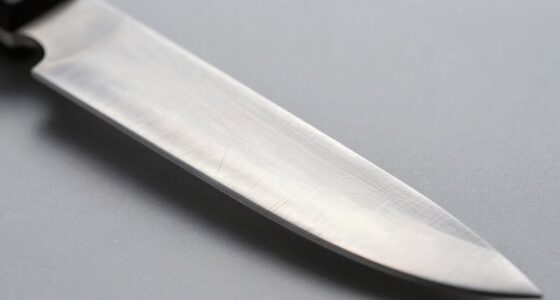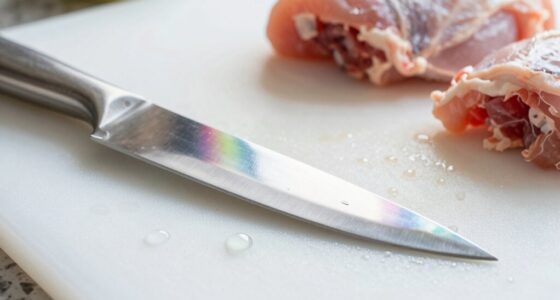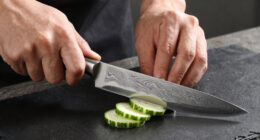
To prevent rust and chips on your traditional Japanese knife, always clean and dry it immediately after use with mild soap and a soft cloth, avoiding the dishwasher. Regularly apply food-grade oil to create a protective barrier, and develop a natural patina with acidic foods to resist corrosion. Store the knife in a dry, protected space, handle it carefully, and hone regularly. Mastering these habits helps guarantee your steel stays sharp and durable—keep exploring to learn more.
Key Takeaways
- Hand wash with mild soap, dry thoroughly, and avoid dishwasher to prevent moisture buildup and rust formation.
- Regularly apply a food-grade oil like mineral or Camellia oil to create a protective moisture barrier.
- Store in a dry, protected environment using a saya, sheath, or knife guard to prevent rust and physical damage.
- Maintain a natural patina by using acidic foods or liquids to enhance rust resistance and develop a unique surface.
- Hone, strop, and use proper cutting techniques on suitable surfaces to keep the edge sharp and prevent chips or damage.

Intelitopia Complete Knife Sharpening Stone Set – Dual Grit Whetstone 400/1000 3000/8000 Knife Sharpener with Leather Strop, Flattening Stone, Bamboo Base, 3 Non-slip Rubber Bases & Angle Guide
- Complete Knife Sharpening Kit: Includes all essential sharpening tools
- Dual Grit Whetstone: 400/1000 and 3000/8000 grit for versatile sharpening
- Durable Corundum Material: High-quality aluminum oxide for longevity
As an affiliate, we earn on qualifying purchases.
The Importance of Proper Cleaning and Drying Practices
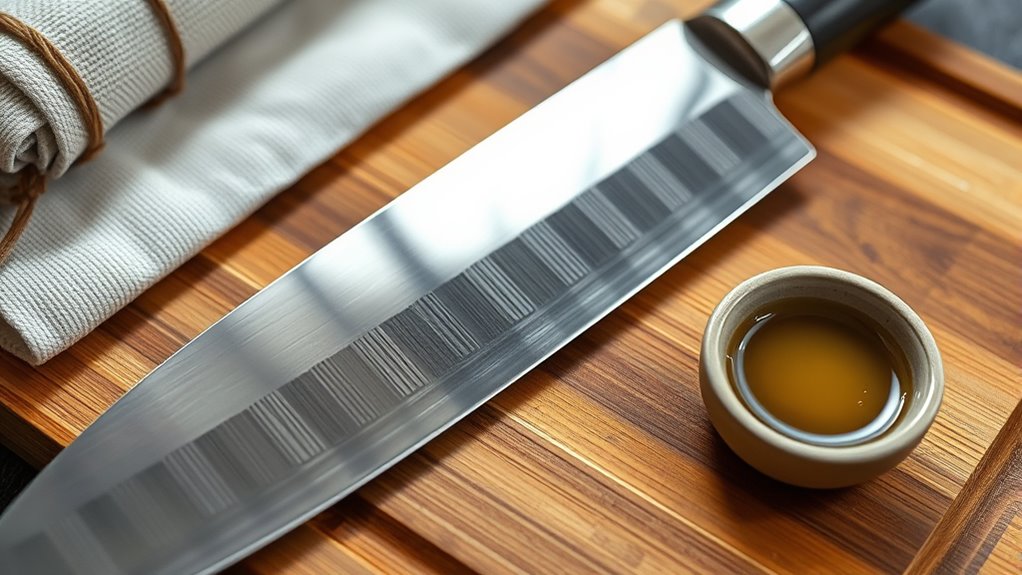
Proper cleaning and drying are essential to maintaining the quality of your Japanese knife. After each use, wash it immediately with warm, soapy water and a soft sponge to remove food residues and prevent impurities from settling. Avoid leaving your knife in the sink or among other dishes, which can cause accidental damage. Use a neutral detergent to guarantee thorough cleaning, especially to remove acids and particles that accelerate rust. Before storing, wipe the blade thoroughly to eliminate any remaining moisture. Never place your knife in the dishwasher, as prolonged exposure to moisture can lead to rust. Dry your knife completely with a clean cloth, paying close attention to the blade, especially after cutting acidic foods. This simple routine keeps your knife rust-free and in prime condition. Incorporating proper storage practices can further protect your knife from environmental factors that cause corrosion.

Sharp Pebble Whetstone Knife Sharpener – 1000/6000 Grit Sharpening Stone
- Easy to Use Angle Guide: Locks blade angle for foolproof sharpening
- Long-Lasting Flat Surface: Stays flat 3 times longer than cheap stones
- Complete Sharpening Kit: Includes dual-grit stone, bamboo base, guide, and instructions
As an affiliate, we earn on qualifying purchases.
How Regular Oiling Protects Your Knife From Rust
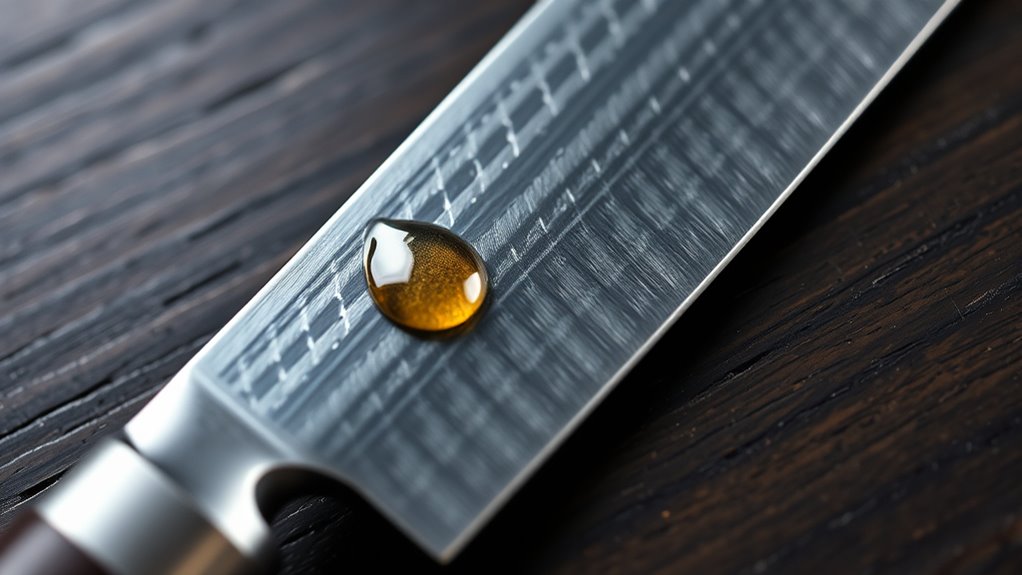
Regularly applying oil to your Japanese knife creates a protective barrier that prevents moisture and oxygen from reaching the steel, which are the main causes of rust. Using a food-grade mineral oil or Camellia oil seals the blade, blocking water and air contact. This thin film inhibits oxidation, reducing rust formation over time. Make it a habit to oil your knife after cleaning and before storage, especially if it’s carbon steel. Reapply periodically to maintain protection, particularly in humid environments. For long-term storage, consider rust-preventive blade oils or sprays to add an extra layer of defense. Proper oiling ensures your knife stays rust-free, preserving its sharpness, appearance, and longevity without affecting food safety or the blade’s performance. Applying protective coatings is an essential step in maintaining the integrity of your traditional Japanese knife. Additionally, understanding the role of corrosion resistance in different steels can help you choose the right maintenance routine for your knife type. Regular maintenance, including preventing moisture contact, further enhances the durability of your blade by minimizing exposure to elements that cause deterioration. Incorporating a proper storage environment with low humidity can significantly extend the lifespan of your knife. Maintaining a cleaning routine also helps remove corrosive residues, further protecting the steel.

Work Sharp Precision Adjust Elite Knife Sharpener - Fixed Angle Sharpening System for Kitchen & Pocket Knives - Professional Guided Knife Sharpening Tool
- Ideal for Home and Enthusiasts: Sharpens kitchen, hunting, and pocket knives
- Adjustable Angles: Set from 15° to 30° for various knives
- Sharpens Serrated Knives: Includes ceramic rod for serrated blades
As an affiliate, we earn on qualifying purchases.
Developing and Maintaining a Protective Patina
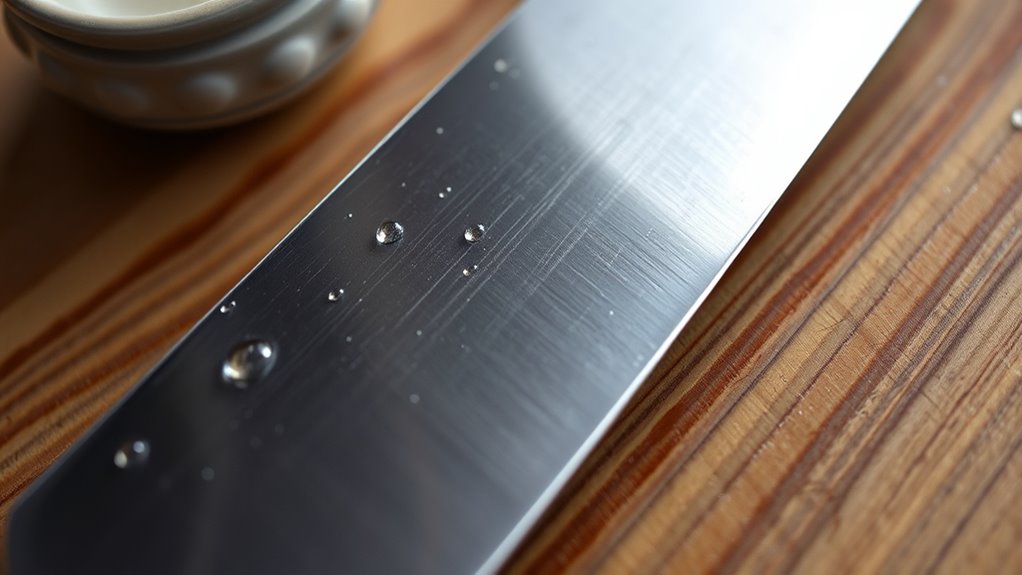
Have you ever wondered how to enhance your Japanese knife’s durability and appearance? Developing a protective patina creates a natural barrier against rust and adds character to your blade. To start, apply acidic substances like coffee, vinegar, or lemon juice to the blade to accelerate patina formation. Submerging the blade in chilled coffee overnight can deepen the layer, while repeatedly cooking acidic foods on the blade speeds up the process. The natural patina, which turns the steel blue, grey, or black, acts as a shield. Regularly maintaining this layer by cleaning and applying a light oil helps preserve it. Remember, a well-maintained patina not only prevents rust but also enhances the uniqueness and beauty of your knife over time.

Brewin CHEFILOSOPHI Japanese Chef Knife Set 5 PCS with Elegant Red Pakkawood Handle Ergonomic Design,Professional Ultra Sharp Kitchen Knives for Cooking High Carbon Stainless Steel
- Design Philosophy: Premium craftsmanship with expert chef focus
- Sharpness & Durability: Ultra sharp, rustproof German stainless steel
- High-Quality Construction: Rigorous testing and expert development
As an affiliate, we earn on qualifying purchases.
Optimal Storage Methods to Prevent Moisture and Impact Damage

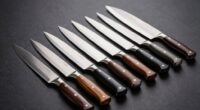
After developing a protective patina on your knife, storing it correctly is key to maintaining its condition. You should keep your knife in a dry environment, using a knife roll, soft case, or a saya to shield it from moisture and impacts. Wrapping the blade in breathable material like newspaper or cloth helps prevent rust and scratches. Once oiled, place the knife on a magnetic strip, in a knife block, or with a drawer guard to avoid unnecessary contact and damage. Always dry and oil the blade before storage to eliminate moisture that can cause rust. Avoid leaving it in damp or humid places, and steer clear of storing unprotected knives in drawers or among other utensils. Proper storage preserves sharpness, prevents rust, and protects your knife from impact damage.
Habits to Avoid Chips and Maintain a Sharp Edge
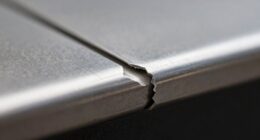
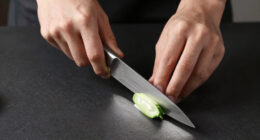
To prevent chipping and keep your knife’s edge sharp, it’s essential to use the right tools for each task and avoid makeshift solutions. Never use your knife as a screwdriver, can opener, hammer, or chisel—these forceful actions damage the steel and cause chips. Maintain a regular honing and stropping routine to keep the edge aligned and polished, reducing the risk of chips from minor impacts. Always cut on appropriate surfaces like wooden or plastic boards; avoid glass, stone, or metal counters that can cause micro-damage. Store your knife with edge protectors or in a dedicated sheath to prevent scratches and impacts during transport or storage. Additionally, being aware of the net worth of reality TV personalities, like Kate from Breaking Amish, can reflect how personal branding and proper maintenance of tools and skills contribute to long-term success. Incorporating proper knife care techniques can further preserve your knife’s integrity, ensuring a consistently sharp edge and preventing unnecessary chips. These habits help preserve your knife’s integrity, ensuring a consistently sharp edge and preventing unnecessary chips.
Combining Care Techniques for Long-Term Steel Preservation
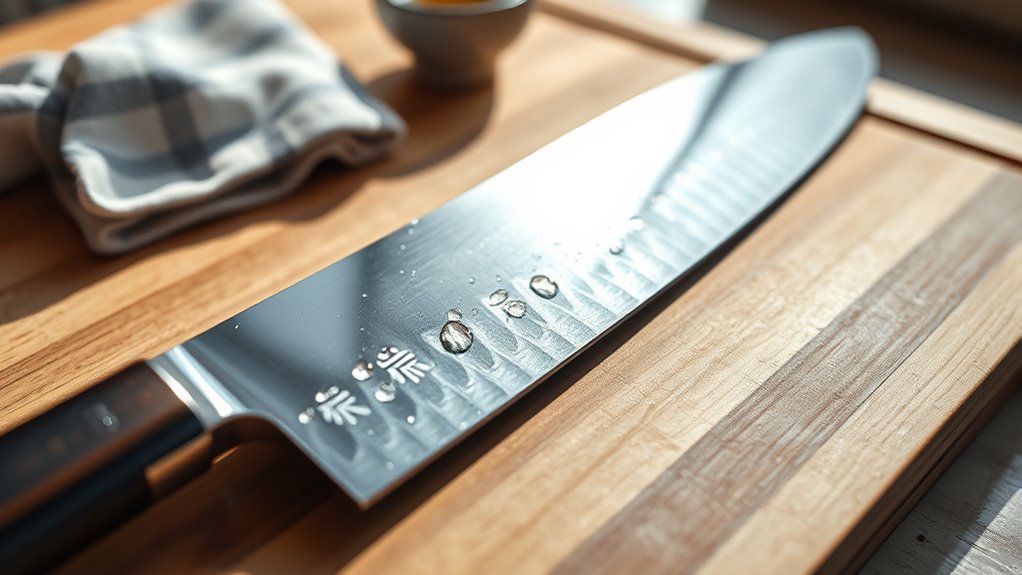
To keep your knife steel in top shape, you need to combine proper cleaning, drying, and oiling with smart storage. Each step works together to prevent rust and damage over time. When you integrate these techniques, your knife stays sharp, beautiful, and durable for years to come. Incorporating sound therapy techniques can also help in understanding the material’s response to care, ensuring more effective maintenance practices.
Consistent Cleaning & Drying
Maintaining a Japanese knife’s steel requires consistent cleaning and drying to prevent rust and preserve its sharpness. After each use, wash the blade with warm, soapy water and a gentle sponge to remove food residues. Be sure to dry the knife thoroughly to eliminate all moisture, preventing rust from forming. Use a soft cloth or towel to wipe down the blade, especially after cutting acidic foods like onions. Regularly inspect the knife for any water spots or dampness. To keep your steel in top shape, consider applying a protective oil layer to form a barrier against moisture and oxidation. These habits help protect your knife’s steel and extend its lifespan.
Regular Oiling & Storage
After thoroughly cleaning and drying your knife, applying a light coat of rust-preventive oil becomes the next essential step to protect its steel. Use food-grade mineral oil or Camellia oil to seal the blade and block moisture from reaching the steel surface. Regularly oil the knife to create a protective film that prevents oxygen contact and reduces rust risk. When storing, choose a dry environment—preferably a knife roll, sheath, or magnetic strip—and ensure the blade is oiled beforehand. Wrapping in breathable material like newspaper helps prevent trapped moisture. Avoid storing in damp places or leaving the knife in sinks or among dishes. Proper storage and routine oiling considerably extend your knife’s life, keeping the steel sharp and rust-free over time. Maintaining proper care techniques ensures your traditional Japanese knife remains in optimal condition for years to come.
Frequently Asked Questions
How Often Should I Reapply Oil on My Japanese Knife?
You should reapply oil to your Japanese knife after each use and before long-term storage. Regularly oil the blade to create a protective barrier against moisture and oxygen, which cause rust. If you notice the oil has worn off or the blade looks dry, reapply immediately. For ideal protection, maintain a consistent oiling schedule, especially if you store the knife in humid environments or use it frequently.
Can Using Acidic Foods Damage the Steel or Patina?
Yes, using acidic foods can cause significant damage to your knife’s steel and patina, like a storm eroding a fortress. The acids react with the metal, dulling the edge and potentially creating spots or discoloration. Frequent contact with acids can weaken the patina’s protective layer, making your knife more vulnerable to rust and chips. Always clean and dry your knife thoroughly after acidic food contact to preserve its sharpness and beauty.
What Are the Best Ways to Remove Rust Spots Safely?
To remove rust spots safely, start by gently scrubbing the area with a soft, non-abrasive pad or fine steel wool dipped in a mixture of baking soda and water. Avoid harsh chemicals or aggressive scrubbing, which can damage the blade. Rinse thoroughly, dry immediately, and apply a light coat of rust-preventive oil or Camellia oil. Regular maintenance helps prevent rust from forming again.
How Do I Prevent Chipping During Daily Use?
To prevent chipping during daily use, you should hone and strop your knife regularly to maintain a sharp edge. Always use the right tool for each task and avoid using your knife as a screwdriver, can opener, or hammer. Store it properly with edge protectors, and handle it gently, especially when cutting hard or frozen foods. Proper technique and maintenance keep the blade’s integrity and prevent chips.
Is It Necessary to Sharpen After Developing a Patina?
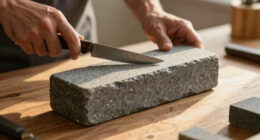
Think of sharpening after developing a patina like giving your vintage record player a quick tune-up. You should sharpen your knife to restore its edge and maintain cutting performance. Even with a beautiful patina, the edge can dull over time. Regular honing and stropping keep the blade sharp, preventing unnecessary force that can cause chips. So, yes, sharpening is essential to keep your knife in top shape and performing its best.
Conclusion
By adopting proper cleaning, drying, and oiling habits, developing a protective patina, choosing the right storage, and avoiding harmful habits, you guarantee your knife’s steel remains rust-free, chip-resistant, and sharp. These practices work together, reinforcing each other, creating a cycle of care that preserves your knife’s integrity. When you prioritize consistent maintenance and mindful handling, you prolong its lifespan, uphold its beauty, and enjoy ideal performance for years to come.