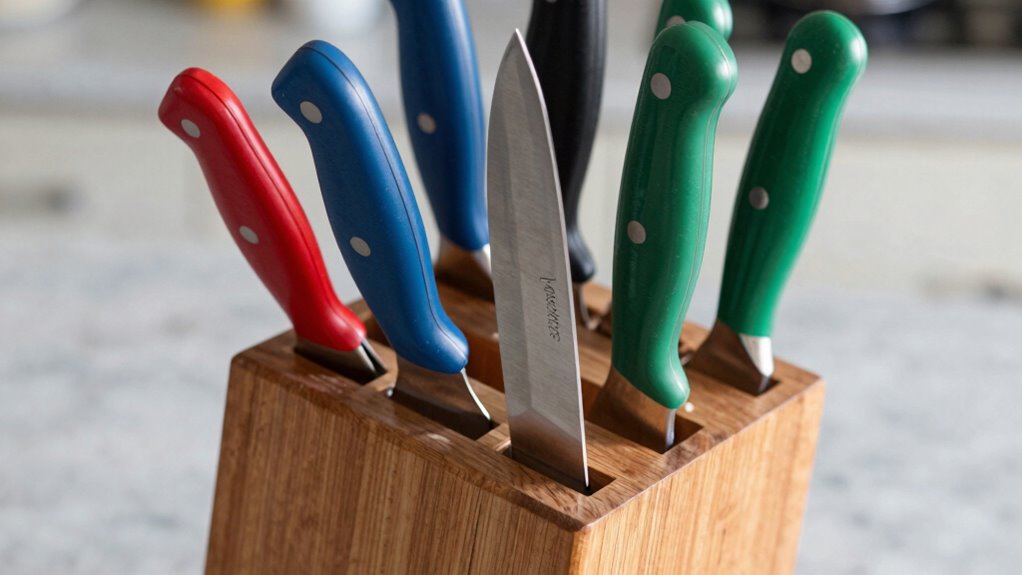

To prevent cross-contamination with knives in your home kitchen, use a color-coded system and dedicated utensils for different food types, like raw meats and produce. Keep raw foods separate on different cutting boards and store them properly to avoid drips or contact. Always clean and sanitize knives, surfaces, and utensils immediately after use. Practice good hand hygiene and organize your workspace to maintain safety. If you keep these tips in mind, you’ll learn more about maintaining a safe kitchen environment.

Get kitchen gear delivered free with Prime
- Fast, free delivery on millions of items
- Prime Video, Amazon Music and more included
- Member-only deals all year
Key Takeaways
- Use color-coded knives dedicated to specific food types and avoid cross-use without cleaning.
- Separate raw meats, seafood, and produce with distinct cutting boards and store them separately.
- Clean and sanitize knives, utensils, and surfaces immediately after each use to prevent bacterial transfer.
- Practice proper hand hygiene by washing hands thoroughly after handling raw foods before touching ready-to-eat items.
- Establish routines for consistent cleaning, storage, and organization to maintain a contamination-free kitchen environment.
color-coded knife set for food safety
As an affiliate, we earn on qualifying purchases.
As an affiliate, we earn on qualifying purchases.
Implementing a Color-Coded Knife System

Implementing a color-coded knife system is an effective way to prevent cross-contamination in your kitchen. By assigning specific colors to knives based on food types, you reduce the risk of transferring bacteria between raw meat, poultry, seafood, fruits, and vegetables. For example, use red knives exclusively for raw meats, yellow for poultry, green for produce, blue for fish, and purple for allergen-free foods. Make sure each color-coded knife stays dedicated to its designated category, and never reuse a knife on different food groups without proper cleaning. This system simplifies your workflow, minimizes mistakes, and keeps your kitchen safer. Clear safety guidelines help ensure consistent use and proper maintenance of the system. Consistently using color-coded knives helps you develop clear habits, reducing contamination risks and ensuring your food prep remains hygienic. Additionally, understanding the contrast ratio of your knives’ materials can help in selecting the best options for visibility and safety, especially in low-light conditions or for individuals with visual impairments. Incorporating material durability considerations can also extend the lifespan of your knives and maintain their safety features over time.
separate cutting boards for raw meats and produce
As an affiliate, we earn on qualifying purchases.
As an affiliate, we earn on qualifying purchases.
Separating Cutting Boards for Different Food Types

To effectively prevent cross-contamination, you should assign separate cutting boards for different types of food. This simple step keeps harmful bacteria from spreading. Here are three ways to do it:
- Designate specific boards for raw meats, seafood, and produce—so bacteria stay confined and don’t mix.
- Use color-coded boards—such as red for raw meats, blue for seafood, and green for fruits and vegetables—making it easy to identify and avoid mistakes.
- Keep unwashed raw produce separate from ready-to-eat foods, preventing contamination before it happens. Incorporating auditory processing techniques like clear labeling and verbal cues can help reinforce proper practices.
- Incorporating hygienic practices such as thorough cleaning and proper storage can further enhance food safety in your kitchen. Additionally, understanding food safety protocols can help you implement comprehensive measures.
knife sanitizing and cleaning tools
As an affiliate, we earn on qualifying purchases.
As an affiliate, we earn on qualifying purchases.
Proper Cleaning and Sanitizing of Knives and Surfaces
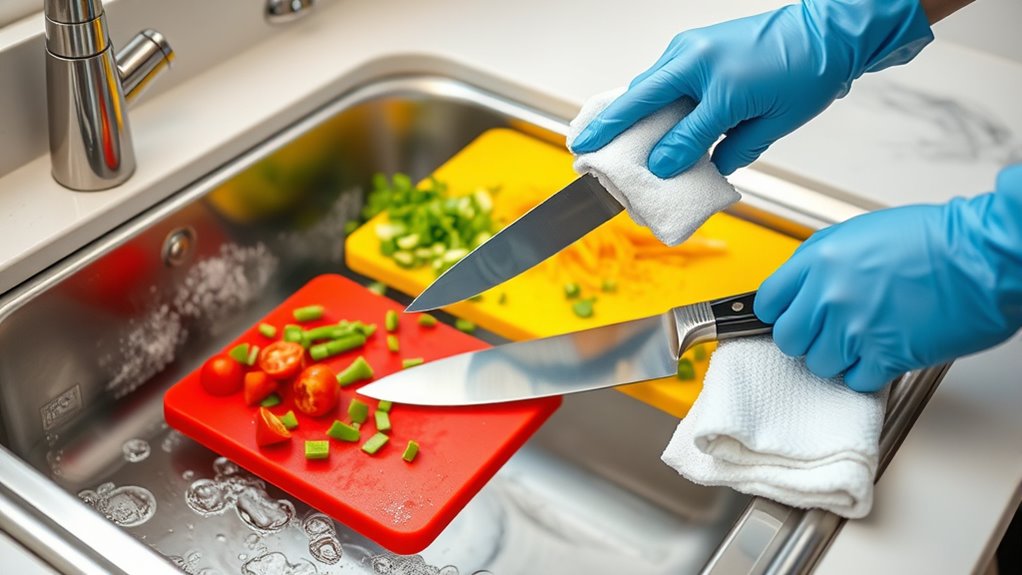
You need to clean knives and surfaces thoroughly after each use to prevent bacteria transfer. Use hot water and soap for effective cleaning, and make sure to scrub all food residues away. Sanitize with high-temperature rinses or approved sanitizers to guarantee germs are eliminated. Regularly checking and replacing kitchen filters can also help maintain a hygienic environment air purifier maintenance. Incorporating proper hygiene practices into your routine ensures ongoing protection against cross-contamination.
Effective Cleaning Techniques
Effective cleaning techniques are essential for preventing cross-contamination and ensuring food safety in the kitchen. You must thoroughly clean knives and surfaces after each use to eliminate bacteria and residues. Incorporating smart cleaning devices such as robotic scrubbers or UV sanitizers can further enhance sanitation efforts. Here are three powerful techniques to keep your tools safe: 1. Wash immediately with hot water and dish soap to remove food particles and germs. 2. Use a scrub brush or sponge to reach all crevices, ensuring no residue remains. 3. Rinse with hot water to wash away soap and loosened debris, then dry with a clean towel to prevent rust and bacterial growth. Regular maintenance of your cleaning tools and understanding cleaning protocols can also help maintain a hygienic kitchen environment. Additionally, employing evidence-based cleaning practices ensures effective removal of pathogens and reduces health risks. Proper storage methods, such as using designated knife blocks or magnetic strips, can further prevent recontamination and keep knives safe between uses.
Proper Sanitizing Methods
After thoroughly cleaning knives and surfaces with hot, soapy water, it’s important to properly sanitize them to eliminate remaining bacteria. You can do this by applying high-temperature rinses or using sanitizing solutions. Use a solution of 1 tablespoon of unscented bleach in a gallon of water, soaking knives and surfaces for at least one minute. Rinse with clean water afterward to remove any residue. Below is a quick guide:
| Sanitizing Method | Recommended Use |
|---|---|
| Hot Water Rinse | For quick, effective bacteria reduction |
| Bleach Solution | For deep sanitizing, soak for 1 min |
| Commercial Sanitizers | Follow manufacturer instructions |
| Boiling Water | Suitable for knives and utensils |
Always air dry items or use a clean towel to prevent recontamination.
kitchen food safety storage containers
As an affiliate, we earn on qualifying purchases.
As an affiliate, we earn on qualifying purchases.
Practicing Effective Hand Hygiene During Food Prep
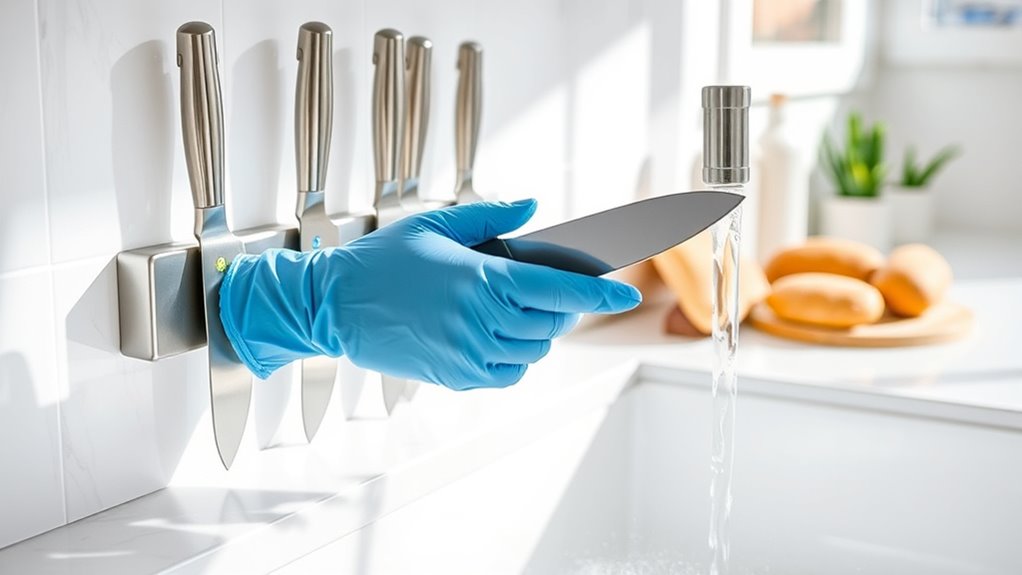
Practicing proper hand hygiene is essential to prevent cross-contamination during food preparation. When you wash your hands thoroughly, you stop germs from spreading to knives, cutting boards, and food. Take these crucial steps to protect yourself:
- Wash your hands with warm, soapy water for at least 20 seconds after handling raw meat, poultry, or seafood. Feel confident you’re reducing bacteria.
- Change gloves immediately if they become contaminated, and wash your hands before handling other foods.
- Clean your hands before touching ready-to-eat items like salads or fruits, ensuring no harmful microbes transfer.
Safe Storage Practices to Prevent Cross-Contact

To prevent cross-contact during storage, you need to organize your fridge carefully. Store raw meats on the bottom shelf in sealed containers to prevent drips onto other foods. Keep ready-to-eat items separate from raw produce and meats. Use designated zones for different food types to avoid accidental contact. Here’s a visual guide:
| Raw Meats | Fruits & Vegetables | Ready-to-Eat Foods |
|---|---|---|
| Sealed containers | Separate drawers or shelves | Covered containers or packaging |
| Keep on bottom shelf | Store unwashed separately | Store separately from raw items |
| Avoid stacking raw meats | Wash produce before storing | Keep in airtight containers |
Proper storage minimizes cross-contact, keeping your kitchen safer. Additionally, understanding food safety principles can help reinforce best practices in your home. Being mindful of proper storage practices ensures that cross-contamination risks are minimized during handling and storage. Implementing food storage guidelines can further reduce the likelihood of bacteria transfer between different food items. Maintaining a clean and organized refrigerator can also prevent bacteria growth and promote overall food safety. Regularly cleaning your storage areas is an essential part of a comprehensive food safety plan to keep all foods safe from contamination.
Using Dedicated Utensils to Minimize Cross-Contamination
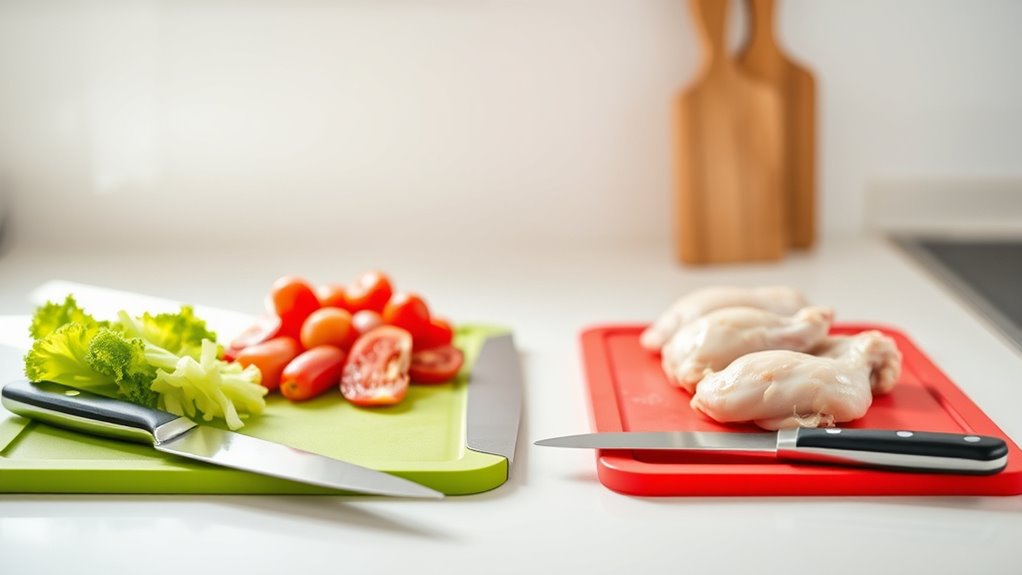
Using dedicated utensils is one of the most effective ways to prevent cross-contamination in your kitchen. When you assign specific utensils for different foods, you reduce the chance of germs spreading. Imagine slicing raw chicken with a utensil then using it on fresh vegetables—dangerous! To keep your kitchen safe, consider these steps:
- Use separate spoons and spatulas for raw meats and cooked foods to avoid accidental transfer.
- Designate specific tongs or forks for handling seafood, poultry, and produce.
- Never reuse utensils that have touched raw meat without thorough washing and sanitizing.
Additional Tips for Keeping Your Kitchen Safe
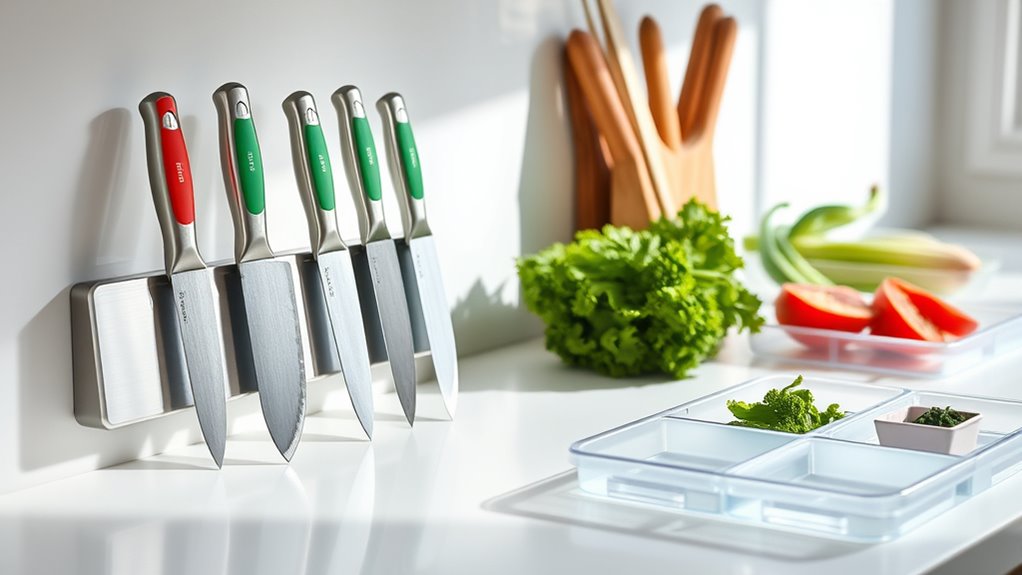
Maintaining a safe kitchen environment goes beyond using dedicated utensils; it also involves implementing additional strategies to prevent contamination. Always wash knives and cutting boards thoroughly after each use, especially when switching between raw meats and produce. Use hot, soapy water and sanitize surfaces with high-temperature rinses to eliminate bacteria. Keep raw meats stored at the bottom of the fridge to prevent drips onto other foods. Practice good hand hygiene by washing hands with soap and water after handling raw foods and before touching cooked or ready-to-eat items. Avoid washing raw meat, as splashing can spread germs. Use separate utensils for tasting or stirring, and leave phones outside the kitchen to prevent microbial transfer. Proper storage and food safety practices are essential for minimizing cross-contamination. Incorporating proper kitchen organization can further reduce the risk of accidental cross-contact. Being aware of zodiac traits and personalities can also help in understanding personal habits that may affect kitchen cleanliness. Additionally, understanding food handling techniques can enhance your overall kitchen safety. Developing a routine for cleaning and equipment maintenance ensures all tools and surfaces stay hygienic, reducing the chances of microbial spread. These extra steps help ensure your kitchen remains a safe environment.
Maintaining Consistency for Ongoing Food Safety
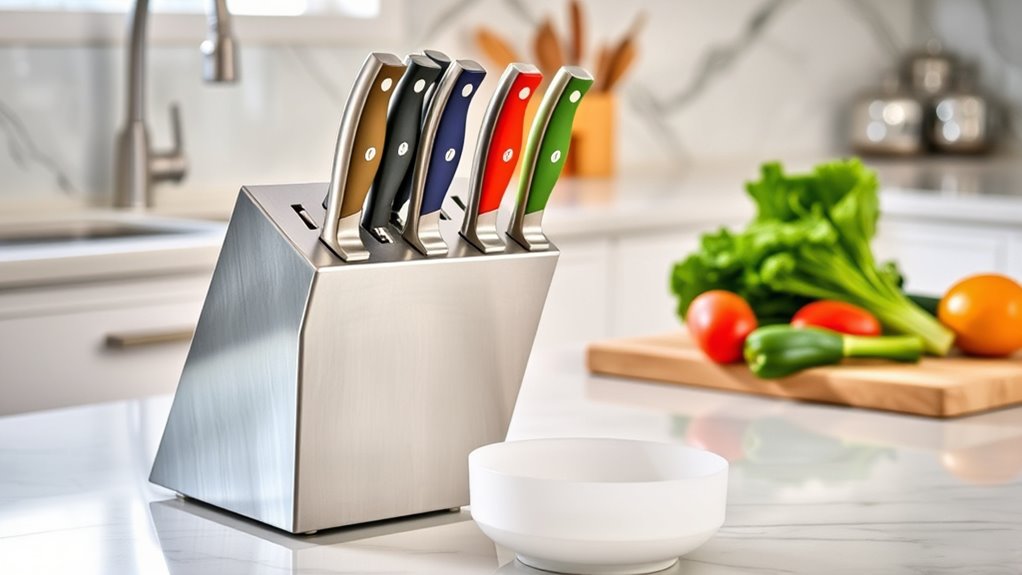
Consistent food safety practices are essential to prevent cross-contamination and protect everyone who eats your food. When you stick to routine habits, you create a safer kitchen environment. To maintain this consistency:
- Follow your color-coded system daily — never skip or deviate, ensuring each knife and board is used correctly.
- Clean and sanitize thoroughly after each use — avoid shortcuts that could let bacteria slip through.
- Review your procedures regularly — staying vigilant keeps food safety top of mind and prevents complacency.
Frequently Asked Questions
How Often Should I Replace or Re-Ink Color-Coded Knives and Boards?
You should replace or re-ink your color-coded knives and boards when they become visibly worn, stained, or develop deep cuts that harbor bacteria. Regularly inspect them for signs of damage, and re-ink or replace as needed, usually every 1-2 years depending on usage. Keeping them clean and replacing them when necessary guarantees they remain effective in preventing cross-contamination, maintaining a safe and hygienic kitchen environment.
Can I Use the Same Knife for Raw and Cooked Foods if Cleaned Properly?
You shouldn’t use the same knife for raw and cooked foods, even if you clean it thoroughly. Proper cleaning reduces bacteria, but there’s still a risk of cross-contamination. To stay safe, designate separate knives for raw and cooked items, or wash and sanitize the knife meticulously between uses. This minimizes bacteria transfer, keeping your food safe and your kitchen hygienic. Always follow recommended cleaning protocols for best results.
Are There Specific Detergents Recommended for Sanitizing Knives and Cutting Boards?
You should use a commercial sanitizer or a solution with at least 180°F rinse water for sanitizing knives and cutting boards. Dish soaps with strong degreasers work well for cleaning, but for effective sanitization, follow up with a rinse in hot water or a food-safe sanitizer. Avoid household bleach unless it’s specifically labeled for food contact surfaces, and always rinse thoroughly to prevent chemical residues.
What Are the Signs That Knives or Boards Need Replacing Due to Wear?
Think of your knives and boards as trusted friends; when they start showing cracks or dullness, it’s time to part ways. Signs include chipped blades, rust spots, or difficulty cutting through foods. For boards, deep grooves or persistent stains indicate wear. Replacing them ensures your kitchen stays safe and efficient, much like retiring an old friend to make room for a new, reliable one to keep your cooking safe and enjoyable.
How Can I Prevent Cross-Contamination if My Kitchen Is Small or Has Limited Space?
In a small kitchen, you prevent cross-contamination by using color-coded knives and cutting boards for different food groups. Store raw meats separately in sealed containers on the fridge’s bottom shelf. Wash knives and boards thoroughly after each use, and always sanitize with hot water or soap. Keep hand hygiene top priority—wash hands frequently and use gloves when necessary. Stay organized and clean to avoid mixing raw and cooked foods.
Conclusion
By following these simple steps, you become the guardian of your kitchen’s safety, turning it into a fortress against cross-contamination. Think of your knives and surfaces as the brushstrokes on a clean canvas, each move preserving purity and health. With consistency and care, you’ll create a safe haven where every meal is crafted with confidence and peace of mind. Keep your tools protected, and your kitchen will remain a sanctuary of safe, wholesome food.
Evergreen bestsellers Picks
bestsellers
As an affiliate, we earn on qualifying purchases.