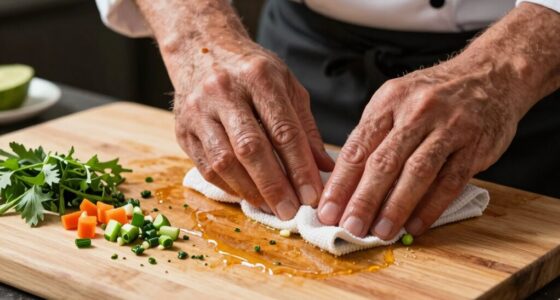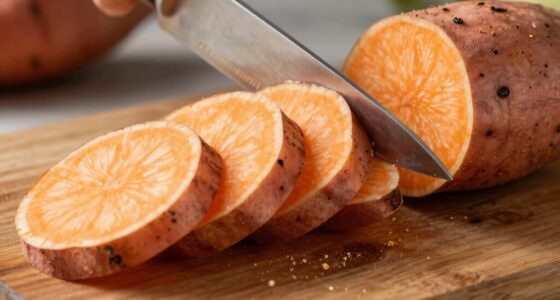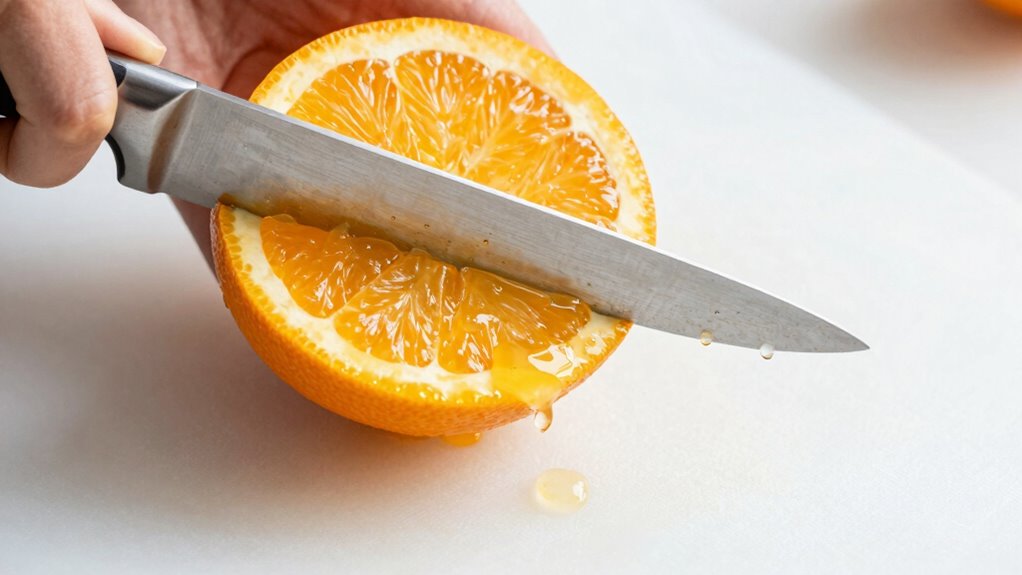

To keep the most juice when cutting citrus, pick ripe, firm fruits and use a sharp knife for clean cuts. Score thick rinds before peeling and slice into even sections or segments to access juice pockets easily. Roll the fruit beforehand to loosen juice sacs, and cut just before juicing to maintain freshness. Proper technique minimizes juice loss and maximizes flavor. Stay tuned for more expert tips to master your citrus preparation.
Key Takeaways
- Score thick-skinned citrus before peeling to minimize juice loss and make peeling easier.
- Slice along natural segments or juice pockets for efficient extraction.
- Use sharp knives to make clean cuts, reducing juice leakage during cutting.
- Roll citrus on the counter beforehand to loosen juice sacs and increase yield.
- Cut just before juicing and handle carefully to preserve maximum freshness and flavor.
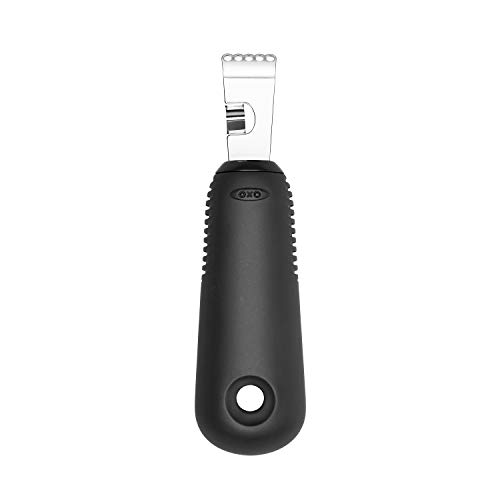
OXO Good Grips Citrus Zester With Channel Knife
2-in-1 tool easily creates citrus zest and garnishes
As an affiliate, we earn on qualifying purchases.
As an affiliate, we earn on qualifying purchases.
Choosing the Best Citrus for Juicing

When selecting citrus for juicing, your goal should be to find fruits that are ripe, fragrant, and firm but slightly yielding to pressure. Different citrus varieties, like oranges, grapefruits, and tangerines, offer unique flavors and juicing benefits. Ripe citrus will be sweet, juicy, and easy to extract, maximizing your yield and flavor. Avoid fruits that are too soft or dull in aroma, as they may be overripe or lacking freshness. Firmness is key—if the fruit feels too hard, it might need more ripening time; if too soft, it could be past its prime. Choosing the right citrus variety ensures you get the most juice, vibrant taste, and maximum health benefits from each fruit. Your selection sets the foundation for a delicious, nutritious juice.

Sieral 1 Pcs Wooden Citrus Reamer Lemon Hand Juicer Beech Wood Handheld Citrus Juicer Kitchen Juicing Tool Manual Orange Lime Lemon Juice Reamer Extractor for Daily Home Bar Cafe Restaurant Use
Practical Design: the head of this wooden juicer is designed into a cone shape, you just need to…
As an affiliate, we earn on qualifying purchases.
As an affiliate, we earn on qualifying purchases.
Preparing Your Workspace and Tools
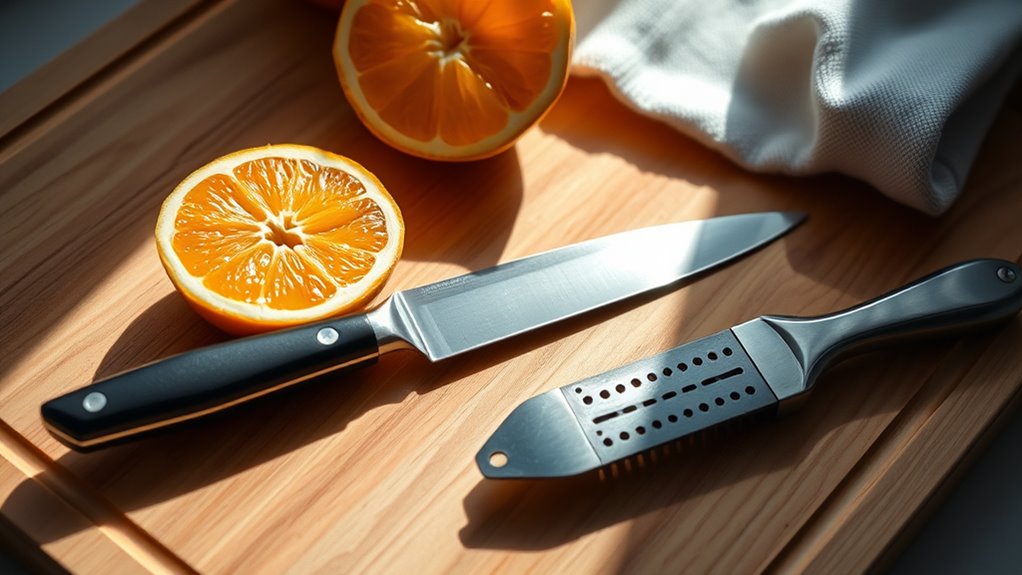
Start by clearing and organizing your workspace so you have plenty of room to work safely. Pick sharp, high-quality knives or citrus cutters to make precise cuts easily. Make sure your cutting surface is stable to prevent slips and accidents during preparation. Additionally, using a properly calibrated cutting technique can help improve your accuracy and reduce waste. To maintain a clean environment and prevent cross-contamination, regularly clean and disinfect your tools and work area. Incorporating energy-efficient tools can also contribute to a more sustainable kitchen environment. Understanding the field‑of‑view of your tools can help you select the best equipment for precise and efficient cuts. Being aware of ergonomic design in your tools can also reduce fatigue and increase safety during extended use.
Clear and Organize Area
Have you ever noticed how a cluttered workspace makes slicing citrus more difficult and dangerous? Keeping your area clear and organized enhances safety and efficiency. Starting with a clean and organized workspace helps prevent accidents and improves your overall experience. Start by tidying your workstation, ensuring there’s enough space to work comfortably. Arrange your tools within easy reach to minimize movement. Regularly check your tools for proper tool maintenance—dull or damaged blades can be hazardous and ruin your citrus. A calm, organized home environment can also make kitchen tasks more enjoyable and less stressful. Remember to:
- Clear away unnecessary items to prevent accidents
- Arrange your cutting board and tools for a smooth workflow
- Maintain your tools by sharpening or replacing blades when needed
- Incorporate proper workspace setup techniques to optimize safety and efficiency
- Consider ergonomic cutting techniques to reduce fatigue and improve control
Implementing safe cutting practices can further reduce the risk of injury and ensure a more efficient citrus slicing process. A well-organized workspace helps you focus, preserves your tools, and keeps juice flowing without spills or slips. Stay tidy, stay safe.
Select Sharp Cutting Tools
Choosing the right cutting tools is essential for safely and efficiently slicing citrus. You want sharp blades that effortlessly cut through the fruit without crushing or tearing it. Dull knives require more force, increasing the risk of slips and injuries, and reduce your cutting precision. Invest in high-quality, sharp knives designed for citrus or general kitchen use, such as a paring knife or chef’s knife. Confirm your blades are sharp before starting; dull blades can ruin your slices and cause frustration. Handling sharp tools with care and keeping them properly maintained will improve your safety and efficiency. When your knives are sharp and ready, you’ll be able to make clean, precise cuts that preserve the juice and flavor of your citrus. Regularly sharpening your knives ensures optimal performance and longevity of your tools for optimal results. Additionally, using high-quality, durable blades can significantly enhance your cutting experience and reduce the need for frequent sharpening. Ensuring your tools are properly maintained and stored can further extend their lifespan and performance, and being aware of proper piercing care and hygiene can help prevent damage to your tools and ensure safety in the kitchen. Properly selecting and caring for your tools aligns with the principles of Free Floating, promoting a clutter-free and efficient workspace.
Prepare a Stable Surface
To guarantee safe and efficient citrus cutting, you need a stable, flat surface that keeps your fruit and tools secure. A solid cutting area prevents slips and accidents while preserving your juice. Before you start, clear your workspace of clutter and choose a sturdy cutting board or countertop. Make certain the surface doesn’t wobble or shift under pressure. For added stability, place a damp cloth or non-slip mat underneath your cutting board. Keep your tools within easy reach to minimize movement. A secure cutting area helps maintain control, reduces mess, and protects your fingers. Remember, a stable surface isn’t just about safety—it’s essential for precise cuts and maximum juice retention. Proper tool selection and technique also play a crucial role in achieving the best results. Preparing your workspace this way makes your citrus prep smoother and more enjoyable, and understanding workstation safety can help prevent accidents. Using a quality cutting board made of durable material can further improve stability and protect your tools. Additionally, incorporating sauna and cold‑plunge safety principles into your setup can ensure a comfortable, injury-free experience. It’s also beneficial to regularly check your workspace ergonomics to reduce strain during prolonged prep sessions.

Fox Run 5689 Grapefruit Spoon, Stainless Steel, Set of 2
0.25 x 1.25 x 6 inch
As an affiliate, we earn on qualifying purchases.
As an affiliate, we earn on qualifying purchases.
How to Properly Slice Citrus for Maximum Juicing
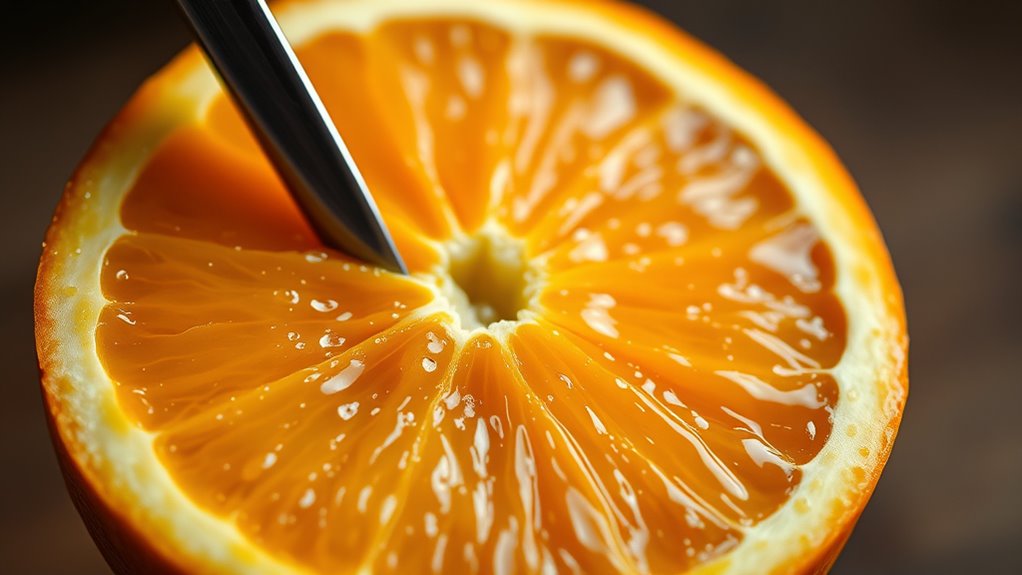
To get the most juice, start by choosing ripe, juicy citrus fruits. Use the right cutting techniques, like slicing across the segments, to break down the fruit efficiently. Proper slicing guarantees you maximize juice extraction with less effort. Additionally, utilizing proper cutting techniques can help you control the cutting process more precisely, further enhancing your juice yield. For example, understanding the biography of citrus varieties can inform the best harvesting and handling practices to optimize freshness and juiciness. Knowing the seasonal availability of different citrus types can also impact their juiciness and overall quality. Embracing creative storytelling about your citrus can also make the experience more enjoyable and engaging.
Choose the Right Citrus
Selecting the right citrus fruit is essential for maximizing juice yield. Different citrus varieties offer unique flavor profiles and juiciness levels, so choose wisely based on your taste and purpose. For bright, tangy juice, opt for lemons or limes. If you prefer sweeter, mellow flavors, oranges or mandarins are ideal. Consider these tips:
- Pick fruits that are heavy for their size, indicating high juice content
- Look for smooth, firm skins without blemishes
- Choose citrus varieties suited to your flavor preference and recipe
- Remember that different citrus fruits have varying energy levels, which can influence the overall freshness and taste of your juice.
Optimal Cutting Techniques
For the best juice yield, proper cutting techniques are essential. Start by using peeling techniques that remove just enough skin without wasting fruit. To maximize juice, cut citrus into even, manageable sections, like halves or wedges, avoiding jagged edges. When zesting, use a microplane or fine grater to remove only the outer layer, preserving the bitter pith. This preserves flavor and prevents juice loss. Keep the fruit steady on a cutting board, applying gentle pressure to avoid squishing. Here’s a quick guide:
| Technique | Purpose |
|---|---|
| Peeling techniques | Remove skin efficiently without waste |
| Zesting tips | Extract flavorful zest without pith |
Maximize Juice Extraction
Properly slicing citrus is key to extracting the maximum amount of juice. When done right, you preserve the citrus flavor and extend the juice shelf life. To get the most juice, follow these tips:
- Cut just before juicing to prevent loss of freshness and flavor.
- Use a sharp knife to make clean cuts, minimizing juice loss.
- Slice along the natural segments to access more juice pockets efficiently.

A Bar Above Gold Citrus Peeler, Stainless Steel Fruit Peeler for Garnishes, Cocktail Twists, Comfortable Grip Peeling Tool for Oranges, Lemons, Limes, Bartender Accessory, Kitchen Essentials, Silver
PRECISION PEELING FOR COCKTAIL GARNISHES: Designed by bartenders who obsess over gorgeous garnishes, this citrus peeler gives you…
As an affiliate, we earn on qualifying purchases.
As an affiliate, we earn on qualifying purchases.
Techniques to Extract the Most Juice
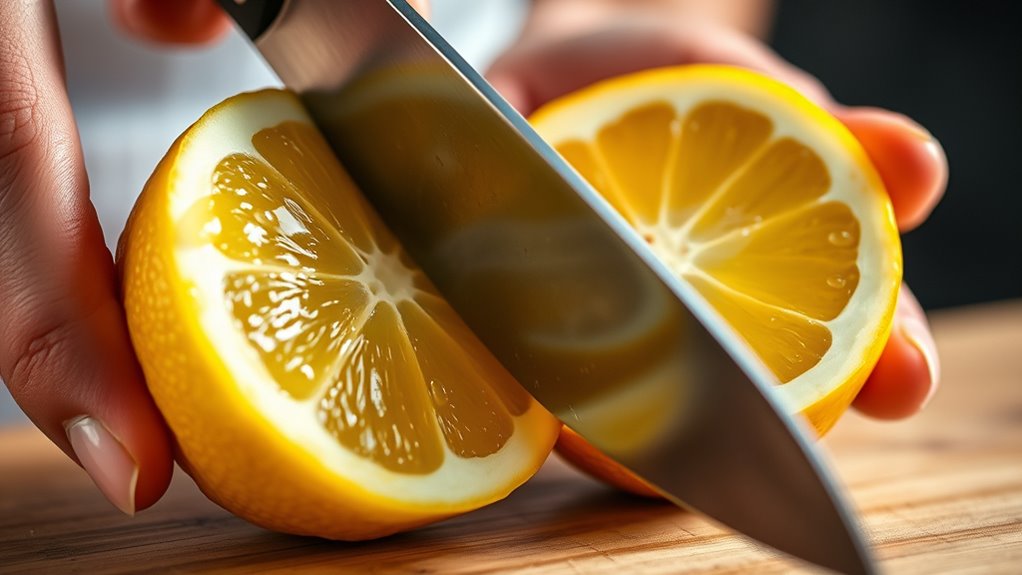
Have you ever wondered how to get every last drop of juice from your citrus? The key is understanding different citrus varieties and adjusting your technique accordingly. For example, oranges and grapefruits are best juiced with a gentle squeeze, while lemons and limes benefit from more force. Using the right juicing accessories, like handheld reamers or electric juicers, can maximize efficiency and juice yield. Make sure to roll the citrus on the counter first to loosen the juice sacs. When cutting, cut at the stem end for easier access, and apply firm, even pressure as you twist or squeeze. These techniques help you extract the maximum juice, regardless of the citrus variety, ensuring you don’t waste a drop.
Tips for Handling Different Types of Citrus
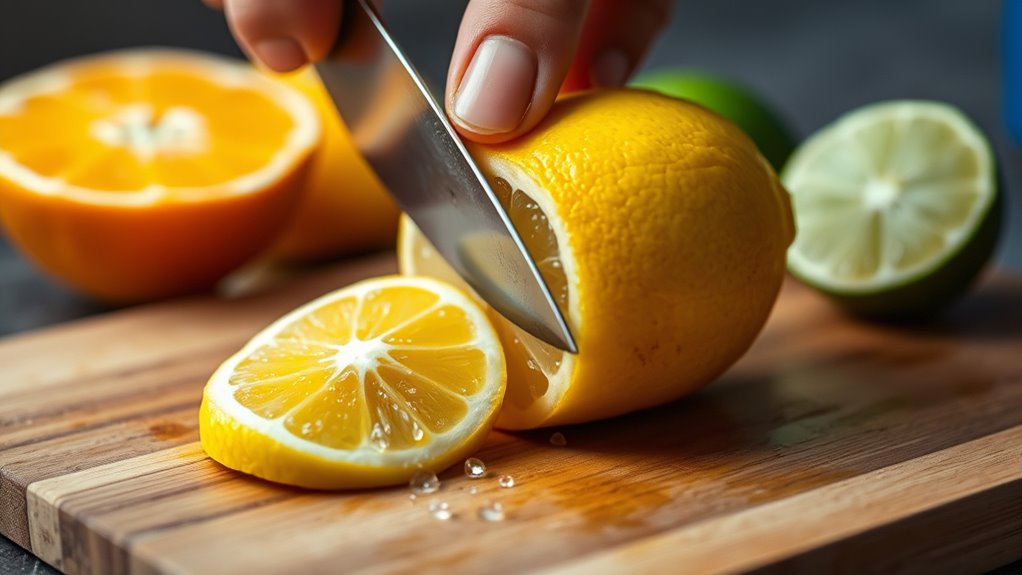
Different citrus varieties require tailored handling to get the best results. Knowing the right peeling techniques helps preserve the fruit’s citrus flavor profiles and ensures you don’t lose juice. For instance, oranges with thick rinds benefit from scoring the peel before peeling, while thin-skinned fruits like tangerines need gentle handling to avoid tearing.
Different citrus varieties need tailored peeling to preserve flavor and juice.
Keep these tips in mind:
- Use a sharp knife or your fingers to peel citrus based on its skin thickness.
- Adjust peeling techniques to suit the fruit’s specific flavor profile—more delicate fruits need gentler handling.
- For grapefruits or lemons, score the peel and remove in sections to minimize juice loss.
Mastering these methods helps you handle different citrus types efficiently, maximizing flavor and juice retention.
Safety Tips for Cutting Citrus Fruits
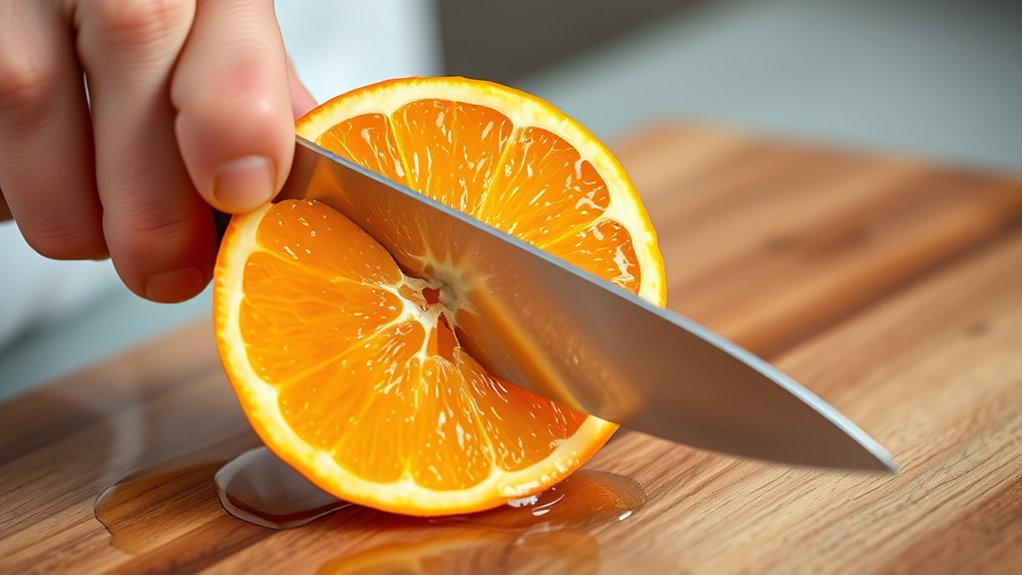
To cut citrus safely, always start by preparing your workspace and tools. Make sure your cutting surface is stable and clean to prevent slips. Use a sharp knife, as dull blades require more force and increase the risk of accidents. Practice proper knife safety by gripping the handle firmly and cutting away from your body. Consider wearing glove protection, especially if you’re new to cutting or handling slippery citrus. This added layer helps prevent cuts if the knife slips. Keep your fingers tucked inward, forming a claw grip to keep fingertips safe. Never rush, and stay focused on your task. Taking these safety precautions minimizes the risk of injury and ensures you can cut citrus efficiently and safely.
Storing and Using Your Citrus Juice Effectively
Properly storing your citrus juice guarantees it stays fresh and retains its vibrant flavor. To ensure maximum flavor preservation, use airtight storage containers that prevent oxidation and contamination. Transfer freshly squeezed juice into glass or plastic containers with tight-fitting lids. Keep the containers in the fridge, ideally within 2-3 days for peak freshness. Consider these tips:
- Fill containers close to the top to limit air exposure
- Label with the date to track freshness
- Freeze in smaller portions for longer storage
Using the right storage methods helps you enjoy the bright, tangy taste of your citrus longer. When you’re ready to use, stir or shake the juice gently to mix any settled pulp. Proper storage not only preserves flavor but also reduces waste.
Frequently Asked Questions
Can I Reuse Citrus Peels for Cooking or Flavoring?
Yes, you can reuse citrus peels for cooking or flavoring. Citrus peel uses include zesting for added flavor or simmering in syrups to create a natural infusion. You can also dry peels to make aromatic spices or use them to flavor oils and vinegars. Reusing peels maximizes their flavor infusion potential, enhances dishes, and reduces waste, making your cooking more sustainable and flavorful.
What’s the Best Way to Avoid Seeds While Juicing?
Imagine a stream of golden juice flowing smoothly into your glass, free of unwanted seeds. To avoid seeds while juicing, use a fine mesh strainer or a citrus reamer with a built-in seed catcher. For quick seed removal, gently roll the citrus before cutting to loosen seeds, then carefully extract them with tweezers or a small spoon. These juicing tips guarantee your drink stays seed-free and perfectly smooth.
How Long Can Freshly Squeezed Citrus Juice Be Stored?
You can store freshly squeezed citrus juice in the refrigerator for up to 2-3 days. To maximize storage duration, use an airtight container and keep it chilled at or below 40°F. Refrigeration tips include filling the container to the top to minimize air exposure and avoiding prolonged storage, as juice can lose flavor and nutrients quickly. Always give it a quick stir before drinking to mix any settled pulp.
Are There Differences in Juicing Soft vs. Firm Citrus Fruits?
When juicing, soft citrus like lemons and oranges release juice with a gentle squeeze, almost like a delicate whisper, making them easier to extract fully. In contrast, firm citrus like grapefruits or pomelos need more force, almost like breaking a stubborn shell, to get the juice out. So, your technique varies based on whether you’re dealing with soft or firm citrus, ensuring you maximize every drop.
Can I Juice Citrus Fruits With Skin Blemishes Safely?
You can safely juice citrus fruits with skin blemishes, but it’s best to wash them thoroughly first to remove pesticide residue and dirt. Check the skin’s integrity—if it’s severely damaged or rotten, avoid juicing those parts, as bacteria can spread. Light blemishes usually won’t affect the juice’s safety, but maintaining good skin integrity helps guarantee your juice stays fresh and healthy.
Conclusion
Now that you know how to cut citrus properly, you’ll maximize every drop of juice. Did you know that citrus fruits can contain up to 90% water? By following these tips, you’ll not only keep more juice in your glass but also enjoy the freshest flavor possible. So, grab your knife and start juicing confidently—your taste buds and your busy mornings will thank you!